31 Renter Friendly Apartment Upgrades That Make Your Space Look Expensive Without Losing Your Deposit

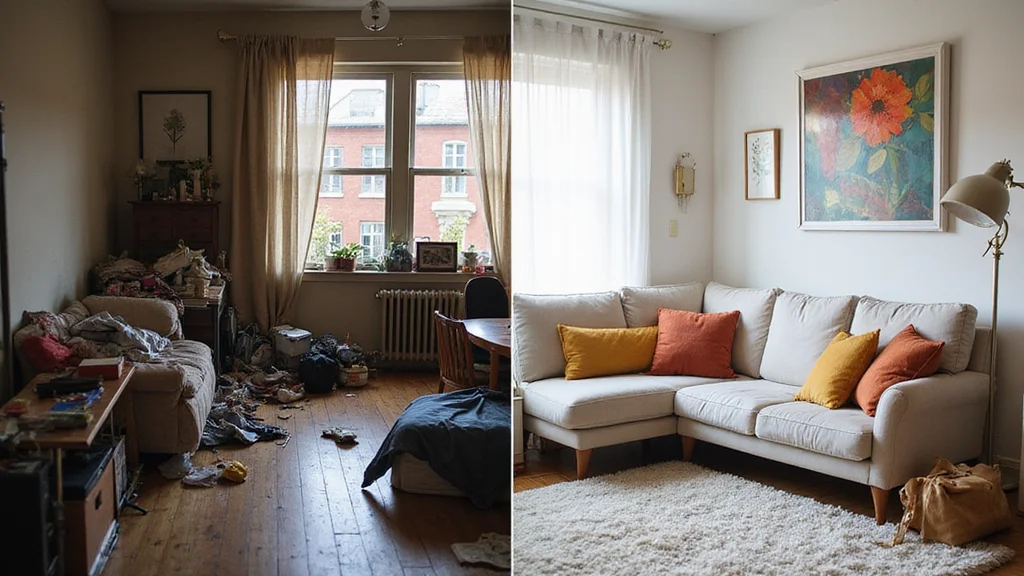
Warm lighting, oversized rugs, curtains, and strategic storage transform rental apartments into intentional, expensive-looking homes without damaging walls or losing your deposit.
Renter friendly apartment upgrades are reversible, no-damage improvements that make a rental look better, feel warmer, and function more like a real home without permanently changing the property. The best renter friendly upgrades include better lighting, curtains, rugs, peel-and-stick surfaces, removable wall decor, swappable cabinet hardware, freestanding storage, plug-in lighting, and styling improvements that can be removed before move-out.
The goal is simple: make your apartment feel expensive, intentional, cozy, and personal while still protecting your security deposit. You are not trying to renovate the apartment. You are trying to layer style, warmth, storage, lighting, texture, and better function over the rental shell you already have.
This guide covers 31 renter friendly apartment upgrades that work for living rooms, bedrooms, kitchens, bathrooms, entryways, and small apartments. Each idea is designed to help your space look better without requiring renovation, permanent damage, or a stressful landlord conversation.
Some links in this article may be affiliate links, which means DecorDreamr may earn a small commission if you buy through them, at no extra cost to you.
The Quick Answer: Best Renter Friendly Apartment Upgrades
The best renter friendly apartment upgrades are warm LED bulbs, plug-in floor lamps, plug-in wall sconces, curtains layered over blinds, oversized area rugs, peel-and-stick wallpaper, peel-and-stick backsplash, cabinet hardware swaps, better showerheads, freestanding storage, mirrors, baskets, adhesive cable channels, and styled surfaces.
These upgrades work because they are affordable, reversible, visually obvious, and useful every day. If you want the fastest transformation, start with lighting, curtains, rugs, and clutter control. These four changes make a basic rental feel warmer, more expensive, and more finished almost immediately.
For most renters, the best starter combination is warm lighting, one oversized rug, curtains, hidden storage, and one visual focal point. That focal point might be an accent wall, a gallery wall, a styled bookshelf, a cozy reading corner, or a better-looking entryway.
Helpful places to start:
- Warm LED bulbs
- Plug-in floor lamps
- Cream curtains
- Oversized area rugs
- Adhesive picture hanging strips
If you want a complete room-by-room system instead of guessing what to buy first, DecorDreamr’s The Rental Reset is designed for exactly this kind of apartment transformation!
Why Reversibility Is Non-Negotiable
Security deposit laws vary by state, but most allow landlords to deduct for damage beyond normal wear and tear. Permanent modifications such as drilling into tile, removing original fixtures, or applying traditional paste wallpaper, can constitute damage unless explicitly approved in writing. Reversible renter friendly apartment upgrades eliminate that risk by design. The goal isn’t just avoiding penalties. It’s feeling genuinely at home in a space you’re renting and today’s product innovations make that more achievable than ever.
Why Making Renter Friendly Upgrades Is Worth Every Penny
A lease is not a sentence to beige walls and borrowed-feeling rooms. The whole point of renting smart is that the right reversible upgrades let you live in a space that looks like you and still hands back your full deposit on move-out day. Everything here peels, leans, or unscrews. None of it picks a fight with your landlord.
Renter friendly upgrades are worth it because they improve your daily life without locking money into someone else’s property. You can enjoy the space now, take most of your purchases with you later, and reverse the changes before moving out.
Thoughtful renter friendly upgrades help in five major ways:
They improve daily comfort. Warm lighting, soft curtains, rugs, and better storage change how your apartment feels every morning and every night.
They make basic rentals look intentional. A plain apartment can look expensive when the lighting, layout, textures, and surfaces feel coordinated.
They protect your apartment from wear. Rugs, runners, organizers, and thoughtful storage can reduce daily damage to floors, cabinets, counters, and walls.
They are usually cheaper than moving. A few hundred dollars in renter friendly upgrades can make your current apartment feel much better without paying moving costs or higher rent.
They can move with you. Lamps, rugs, curtains, baskets, mirrors, furniture, trays, and decor pieces can work in your next home too.
A smart rental transformation does not require doing everything at once. Start with the changes that affect the most surface area and daily mood: lighting, floors, windows, storage, and one focal point. Those upgrades usually give you the most visible improvement for the least risk.
For budget-first renters, DecorDreamr’s Budget Decor Blueprint can help you decide where to spend, where to save, and what upgrades actually change the room.
Before You Start: How to Protect Your Security Deposit
Before making any renter friendly apartment upgrades, read your lease and document your apartment. This is the unglamorous step that protects your money later. Look for language about alterations, painting, adhesives, wall mounting, plumbing fixtures, electrical fixtures, and restoration requirements.
The move-out standard is simple: the apartment should be returned in the same condition it was in when you moved in, excluding normal wear and tear. That means you should keep original fixtures, photograph existing damage, avoid aggressive adhesives, test removable products first, and get written approval for anything involving plumbing, electrical work, or permanent mounting.
Use this renter-safe rule: if an upgrade cannot be removed cleanly, restored easily, or explained confidently at move-out, do not do it without written permission.
Before starting, take photos and videos of your walls, floors, cabinets, countertops, tile, fixtures, doors, and windows. Save them in a folder labeled with your move-in date. If you swap hardware, store the originals in a labeled bag. If you use peel-and-stick products, test a hidden area first. If you mount anything, check the weight limit twice.
31 Renter Friendly Apartment Upgrades That Actually Make a Difference
These 31 renter friendly apartment upgrades are designed to improve the look, feel, and function of your space without making permanent changes. You do not need every single one. Choose the upgrades that solve your apartment’s biggest problems first: harsh lighting, bare floors, basic blinds, clutter, blank walls, awkward layouts, or builder-grade finishes.
1. Swap Cool Bulbs for Warm LED Bulbs
Lighting is the fastest way to make an apartment feel more expensive. Many rentals come with harsh cool bulbs that make rooms feel flat, sterile, or unfinished. Swapping them for warm LED bulbs instantly makes the space feel softer and more intentional.
Choose warm white bulbs around 2700K to 3000K for living rooms and bedrooms. Use slightly brighter bulbs for kitchens, bathrooms, and work areas. This upgrade is cheap, reversible, and useful every single day.
Best rooms: living room, bedroom, kitchen, bathroom
Estimated cost: $10 to $40
Difficulty: easy
Deposit risk: very low
2. Add Plug-In Floor Lamps
A single overhead light rarely makes a room look good. Plug-in floor lamps let you create layered lighting without wiring anything. Place one next to a couch, reading chair, media console, or dark corner to make the room feel warmer and more designed.
The best renter friendly floor lamps are simple, warm, and tall enough to spread light across the room. Avoid overly trendy pieces unless they match the rest of your decor.
3. Use Plug-In Wall Sconces
Plug-in wall sconces give you the look of custom lighting without hiring an electrician. They work especially well beside a bed, above a reading corner, near a desk, or on each side of a sofa.
Use adhesive cord covers or paintable cable channels to hide visible cords. If mounting requires screws, check your lease first. For lower-risk setups, choose lightweight sconces and follow the manufacturer’s mounting instructions carefully.
4. Add Under-Cabinet Lighting
Under-cabinet lighting can make a basic rental kitchen feel dramatically more expensive. Battery-powered or plug-in LED light bars add warmth to the countertop area and make evening cooking feel less harsh.
This upgrade is especially effective in apartments with dark cabinets, poor overhead lighting, or no natural light in the kitchen. Choose warm light instead of blue-toned light for a more elevated effect.
5. Layer Curtains Over Blinds
Basic rental blinds are practical, but they rarely look beautiful. Layering curtains over existing blinds instantly softens the room and makes it feel more finished. This works in living rooms, bedrooms, offices, and dining corners.
Choose curtains in linen, cotton, velvet, or textured neutrals. Cream, oatmeal, warm white, taupe, and soft beige are safe choices for most rentals.
6. Raise Curtain Rods Visually
One of the easiest ways to make an apartment look bigger is to hang curtains higher and wider than the window frame. This makes ceilings feel taller and windows feel larger.
When possible, place the rod several inches above the window frame and extend it past the sides of the window. If drilling is not allowed, consider tension rods, no-drill curtain brackets, or renter-safe alternatives that work with your window style.
7. Add Oversized Area Rugs
An oversized area rug can hide ugly flooring, define a seating area, reduce echo, and make a rental feel more expensive. In living rooms, a rug that is too small often makes the entire space feel unfinished. When in doubt, size up.
A good rug helps your furniture feel connected instead of floating. It also protects rental flooring from wear, which can be helpful at move-out.
8. Use Washable Runners in Kitchens and Entryways
Kitchen and entryway floors take the most abuse. A washable runner adds color, pattern, warmth, and protection without permanently changing the floor.
Use runners in narrow spaces where a full rug would not fit. This is especially useful in galley kitchens, small entryways, hallway apartments, and rental bathrooms with cold tile.
9. Try Peel-and-Stick Wallpaper on One Accent Wall
Peel-and-stick wallpaper is one of the most popular renter friendly apartment upgrades because it can completely change a room without paint. It works best as an accent, not on every wall. Try it behind a bed, behind a sofa, in an entryway, or inside a small dining nook.
Always test a hidden area first, especially if your walls have flat paint, old paint, texture, or recent repainting. Peel-and-stick wallpaper is renter friendly only when the surface is compatible and removal is done slowly.
10. Use Removable Wall Decals
Removable wall decals are a lower-commitment alternative to wallpaper. They work well for bedrooms, office corners, and small blank walls that need personality.
Choose decals that match your overall design style. Minimal botanical decals, soft arches, subtle geometric shapes, and small mural-style decals usually look more elevated than loud novelty designs.
11. Create a Gallery Wall With Adhesive Strips
A gallery wall can make a rental feel personal without putting nail holes everywhere. Use adhesive picture-hanging strips and lightweight frames to create a polished wall above a couch, bed, desk, or entry console.
The key is planning before hanging. Lay the frames on the floor first, measure the spacing, and check the weight limits on every strip. Pull removal tabs slowly when it is time to take them down.
12. Add Peel-and-Stick Backsplash
Peel-and-stick backsplash can make a rental kitchen look cleaner and more finished without grout, tile work, or demolition. It is especially useful behind a sink, under cabinets, or in a small coffee bar area.
Choose styles that look realistic and simple. Classic subway tile, soft stone, zellige-style tile, marble-look sheets, and subtle neutrals are usually more timeless than overly glossy or busy patterns.
Shop peel-and-stick backsplash: https://www.amazon.com/s?k=peel+and+stick+backsplash+tile+for+kitchen&tag=decordreamr-20
13. Cover Ugly Counters With Removable Contact Paper
Removable contact paper can improve old laminate counters, bathroom vanities, desks, and small shelves. It is not ideal for every surface, but when done carefully, it can make a dated rental feel much cleaner.
Use it in low-risk areas first, like a bathroom counter or small desk surface. Avoid using low-quality contact paper near high heat, heavy water exposure, or rough surfaces. Test removal before covering a large area.
Shop removable contact paper: https://www.amazon.com/s?k=removable+countertop+contact+paper&tag=decordreamr-20
14. Swap Cabinet Knobs and Pulls
Changing cabinet hardware is one of the easiest ways to make a rental kitchen or bathroom look more updated. A set of simple brass, matte black, chrome, or wood knobs can shift the entire mood of the room.
Keep every original knob, screw, and pull in a labeled bag. Before buying replacements, measure the distance between screw holes so the new hardware fits the existing cabinet holes.
Shop cabinet knobs and pulls: https://www.amazon.com/s?k=cabinet+knobs+and+pulls&tag=decordreamr-20
15. Add a Better Showerhead
A better showerhead is a daily quality-of-life upgrade. Many rentals come with basic low-pressure fixtures, and a simple replacement can make the bathroom feel more comfortable immediately.
Keep the original showerhead and reinstall it before moving out. Because this involves plumbing, check your lease and consider getting written approval from your property manager first.
Shop renter friendly showerheads: https://www.amazon.com/s?k=easy+install+showerhead+high+pressure&tag=decordreamr-20
16. Use a Curved Tension Shower Rod
A curved tension shower rod can make a small bathroom feel roomier without drilling into tile. It gives the shower curtain more breathing room and can make a basic tub-shower combo feel less cramped.
Choose a tension-mounted version if your bathroom layout allows it. Make sure the pressure is secure but not so aggressive that it damages the wall surface.
Shop curved tension shower rods: https://www.amazon.com/s?k=curved+tension+shower+rod+no+drill&tag=decordreamr-20
17. Add Adhesive Towel Hooks
Many rental bathrooms do not have enough towel storage. Adhesive towel hooks can add function without drilling into tile or doors.
Use them on smooth surfaces only and follow the product’s weight limits. Avoid placing heavy wet towels on hooks that are not rated for that weight.
Shop adhesive towel hooks: https://www.amazon.com/s?k=adhesive+towel+hooks+for+bathroom&tag=decordreamr-20
18. Upgrade Bathroom Storage With Freestanding Shelves
A narrow freestanding shelf can transform a bathroom with no linen closet, tiny vanity, or limited cabinet space. Use it for towels, baskets, toiletries, candles, and folded washcloths.
Choose a shelf that fits the scale of the bathroom. In a small rental bathroom, tall and narrow usually works better than wide and bulky.
Shop freestanding bathroom shelves: https://www.amazon.com/s?k=narrow+freestanding+bathroom+shelf&tag=decordreamr-20
19. Use Over-the-Door Organizers
Over-the-door organizers create storage without using floor space or wall holes. They work on closet doors, pantry doors, bathroom doors, bedroom doors, and laundry doors.
Use them for shoes, cleaning products, hair tools, pantry overflow, accessories, or small bathroom items. Choose fabric or slim metal styles if you want the organizer to look cleaner and less dorm-like.
Shop over-the-door organizers: https://www.amazon.com/s?k=over+the+door+organizer&tag=decordreamr-20
20. Add a Slim Entryway Console
A rental entryway often becomes a clutter zone. A slim console table creates a landing spot for keys, mail, sunglasses, and daily essentials without taking up much room.
Style it with a tray, small lamp, bowl, mirror, and basket underneath. This makes the apartment feel more intentional the moment you walk in.
Shop slim entryway console tables: https://www.amazon.com/s?k=slim+entryway+console+table&tag=decordreamr-20
21. Use Freestanding Bookshelves
Freestanding bookshelves add storage, height, and personality without built-ins. They can hold books, baskets, plants, framed art, dishes, folded linens, or decor.
For a more expensive look, avoid overfilling every shelf. Mix vertical books, horizontal stacks, baskets, negative space, and a few larger decorative pieces.
Shop freestanding bookshelves: https://www.amazon.com/s?k=freestanding+bookshelf+neutral&tag=decordreamr-20
22. Add Baskets to Hide Visual Clutter
Baskets are one of the easiest ways to make a rental feel calmer. They hide blankets, cords, cleaning products, shoes, pet supplies, bathroom items, and random everyday clutter.
Use matching or coordinating baskets to create visual consistency. Natural materials like seagrass, rattan, canvas, and woven textures add warmth to plain apartment finishes.
Shop woven storage baskets: https://www.amazon.com/s?k=woven+storage+baskets+for+shelves&tag=decordreamr-20
23. Use Peel-and-Stick Floor Tiles Carefully
Peel-and-stick floor tiles can be effective in small bathrooms, laundry closets, or entryways, but they require more caution than wall products. Floors deal with moisture, foot traffic, cleaning products, and friction.
Only use removable floor tiles on compatible surfaces, and test first. Avoid applying them to delicate floors, damaged floors, or surfaces where removal could create a problem. When in doubt, use a washable rug or runner instead.
Shop peel-and-stick floor tiles: https://www.amazon.com/s?k=removable+peel+and+stick+floor+tiles&tag=decordreamr-20
24. Add a Room Divider or Folding Screen
A room divider can make a studio apartment or open layout feel more functional. It can separate a bed from a living area, hide storage, create a work zone, or add architectural interest.
Choose a divider that looks intentional, not temporary. Cane, wood, fabric, or simple upholstered screens usually feel more elevated than flimsy plastic dividers.
Shop room dividers: https://www.amazon.com/s?k=folding+room+divider+screen&tag=decordreamr-20
25. Create a Cozy Reading Corner
A cozy corner can make even a small apartment feel designed. Use a chair, small side table, floor lamp, throw blanket, and plant to create a dedicated spot for reading, coffee, or relaxing.
This is a high-emotion upgrade because it changes how you use the apartment. Instead of feeling like one generic room, the space starts to have zones and rituals.
Shop cozy accent chairs: https://www.amazon.com/s?k=small+accent+chair+for+bedroom+corner&tag=decordreamr-20
26. Add Plants or Realistic Faux Plants
Plants bring life into a rental and soften hard edges. If your apartment has low light or you do not want maintenance, realistic faux plants can still improve the look of the space.
Use plants on windowsills, bookshelves, coffee tables, kitchen counters, bathroom shelves, and empty corners. Larger plants can make a room feel more expensive because they add height and sculptural shape.
Shop realistic faux plants: https://www.amazon.com/s?k=realistic+faux+plants+indoor&tag=decordreamr-20
27. Use Mirrors to Reflect Light
Mirrors are one of the best renter friendly upgrades for small or dark apartments. They reflect natural light, make rooms feel larger, and add a finished look to blank walls.
Place mirrors across from windows, near entryways, above consoles, or behind lamps. If wall mounting is not allowed, use a leaning floor mirror or a mirror placed securely on furniture.
Shop leaning floor mirrors: https://www.amazon.com/s?k=leaning+floor+mirror+full+length&tag=decordreamr-20
28. Add Removable Open Shelving Alternatives
If you love the look of open shelving but cannot drill into walls, use freestanding shelves, ladder shelves, counter shelves, or slim bookcases instead. These give the same styled, layered effect without permanent installation.
In kitchens, a small counter shelf can create space for mugs, spices, coffee tools, or everyday dishes. In bathrooms, a ladder shelf can hold towels and baskets.
Shop counter shelves: https://www.amazon.com/s?k=kitchen+counter+shelf+organizer&tag=decordreamr-20
29. Use Furniture Layout to Create Zones
Layout is free, but it can completely change how your apartment feels. Move furniture away from the walls when possible, create conversation areas, define work zones, and use rugs to separate spaces.
In small apartments, zoning matters even more. A rug can define the living room, a console can create an entryway, and a desk placed near a window can become a proper work corner.
30. Hide Cords With Adhesive Cable Channels
Visible cords can make an otherwise beautiful apartment feel messy. Adhesive cable channels, cord boxes, and cord clips help hide wires from lamps, TVs, routers, desks, and plug-in sconces.
This is a small detail that has a big visual payoff. The cleaner your cords look, the more polished your apartment feels.
Shop cord covers: https://www.amazon.com/s?k=adhesive+cord+covers+for+wall&tag=decordreamr-20
Shop cable management boxes: https://www.amazon.com/s?k=cable+management+box&tag=decordreamr-20
31. Style Surfaces With Trays, Books, Candles, and Texture
The final layer is styling. Coffee tables, nightstands, consoles, shelves, bathroom counters, and kitchen counters all look more intentional when styled with simple groupings.
Use trays to gather items, books to add height, candles to add warmth, bowls to hold small objects, and textured pieces to make the space feel finished. The goal is not clutter. The goal is controlled, useful, beautiful surfaces.
Shop decorative trays: https://www.amazon.com/s?k=decorative+tray+for+coffee+table&tag=decordreamr-20
Shop flameless candles: https://www.amazon.com/s?k=flameless+candles+realistic&tag=decordreamr-20
Renter Friendly Living Room Upgrades
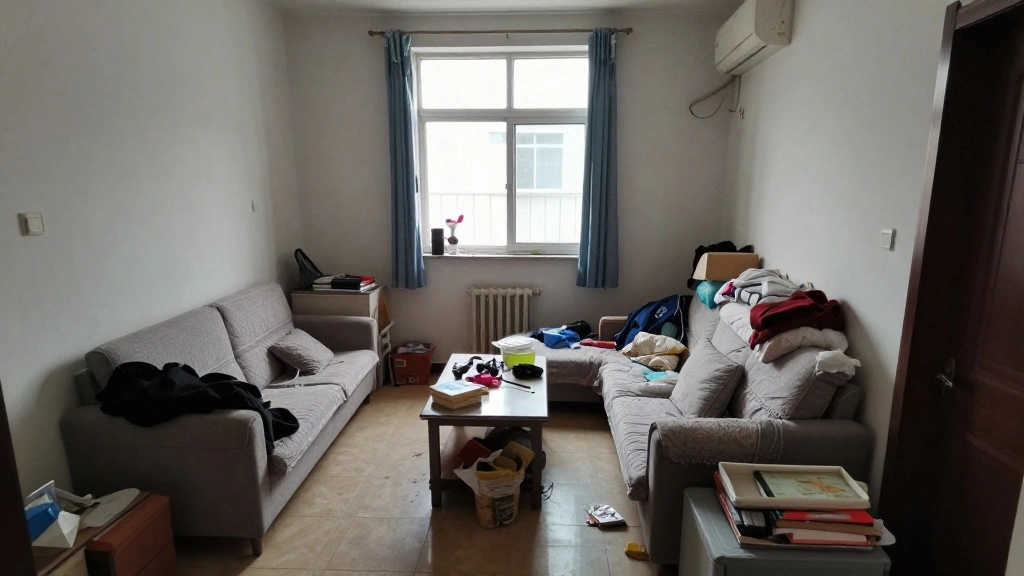
The living room sets the tone for the whole apartment, so it earns the first upgrades. Removable wallpaper on one wall, a layered rug over the builder-grade carpet, and a couple of velvet or linen throw pillows do more than a furniture haul. Add one warm lamp in a dark corner and a trailing houseplant, and a rental starts reading as a room someone actually chose.
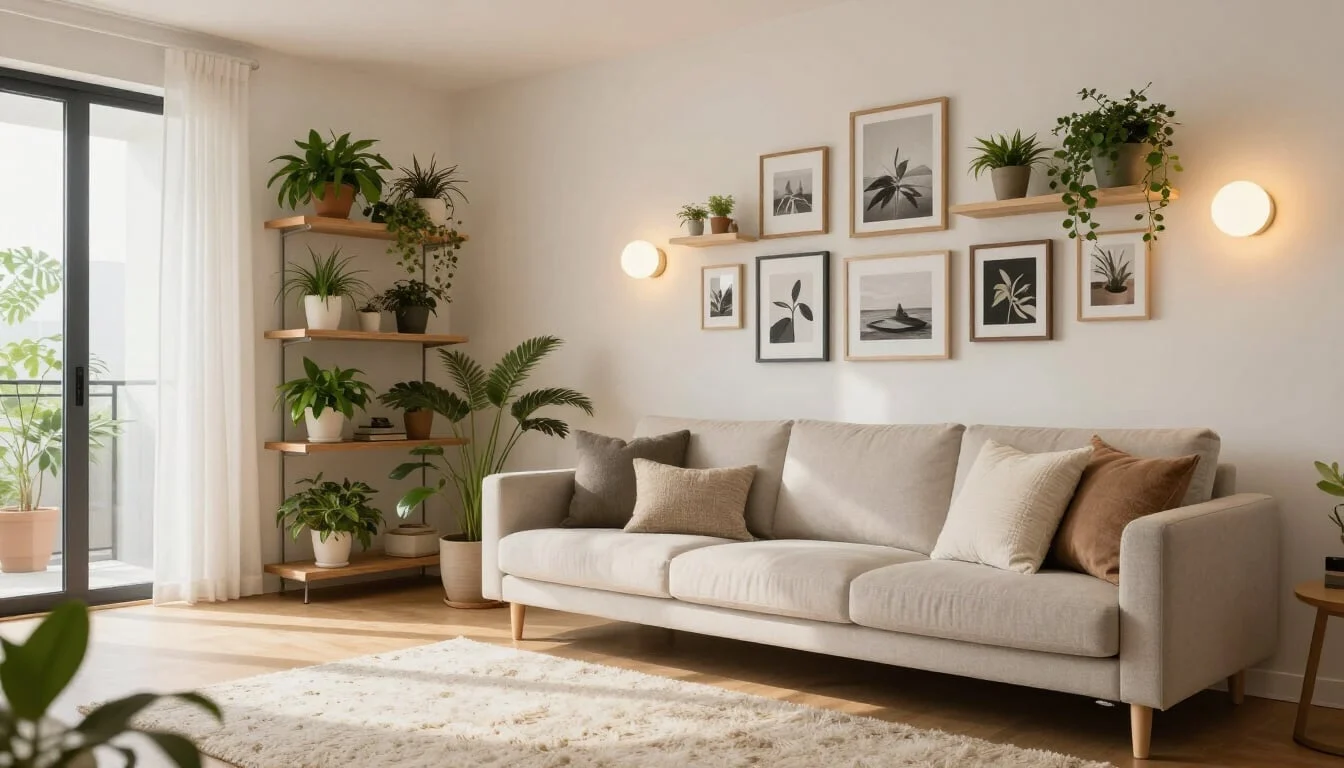
For a basic rental living room, start with warm LED bulbs, one plug-in floor lamp, curtains over blinds, an oversized area rug, and a styled coffee table. Then add a gallery wall, mirror, plant, or peel-and-stick accent wall if the room still feels unfinished.
The best renter friendly living room upgrades are warm LED bulbs, plug-in lamps, curtains layered over blinds, oversized area rugs, gallery walls with adhesive strips, mirrors, baskets, plants, and styled coffee tables.
A living room does not need expensive furniture to look elevated. It needs scale, warmth, texture, lighting, and fewer random objects sitting out.
Want the exact framework for turning a basic rental living room into something that feels finished? DecorDreamr’s The Rental Reset walks through the renter-safe decisions that make the biggest difference first: [The Rental Reset]([INSERT THE RENTAL RESET URL]).
Renter Friendly Bedroom Upgrades
A bedroom should feel like the calmest room you own, even when you do not own it. The fastest path there is lighting, not more stuff: swap the overhead glare for two warm bedside sources and the whole room softens. Layer real linen bedding, hang art on removable strips, and put down a rug your feet meet first thing.
Start with warmer bulbs, layered bedding, curtains, a rug under the bed, and plug-in sconces or bedside lamps. If the wall behind the bed feels blank, use peel-and-stick wallpaper, framed art with adhesive strips, or a large fabric wall hanging.
The best renter friendly bedroom upgrades are warm bedside lighting, plug-in sconces, soft curtains, a large rug under the bed, peel-and-stick wallpaper behind the headboard, adhesive picture strips for art, baskets for extra blankets, and mirrors to make the room feel larger.
For a more expensive bedroom look, avoid matching everything too perfectly. Mix soft textures, warm woods, simple art, and a few calm colors instead.
Renter Friendly Kitchen Upgrades
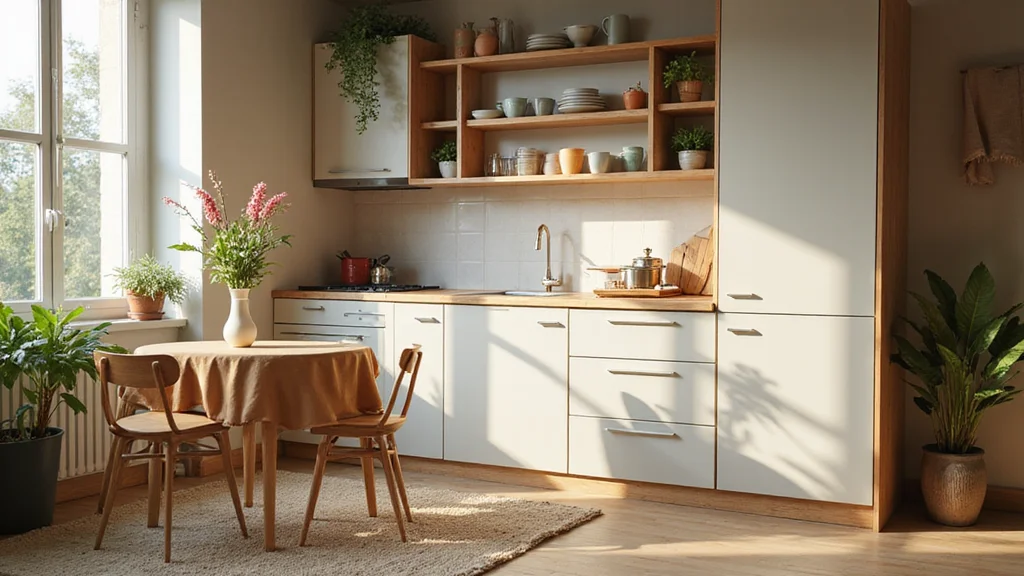
The kitchen is the hardest room to change as a renter and the most satisfying when you do. Peel-and-stick backsplash tile covers dated wall, removable shelf liner refreshes tired cabinets, and a strip of under-cabinet lighting makes the counter feel twice as expensive after dark. A runner rug and a few open-shelf objects finish it.
Start with under-cabinet lighting, a washable runner, better cabinet hardware, and organized counters. If the backsplash is plain or ugly, consider peel-and-stick backsplash tiles after testing the surface. If the counters are dated, removable contact paper may help in low-risk areas.
The best renter friendly kitchen upgrades are under-cabinet lighting, warm LED bulbs, peel-and-stick backsplash, cabinet hardware swaps, washable runners, countertop organization, freestanding pantry shelves, and trays or baskets for counter organization.
Kitchen upgrades should be practical first. Anything near heat, water, or food prep needs to be durable, cleanable, and removable.
Renter Friendly Bathroom Upgrades
A rental bathroom turns spa-like faster than any other room because it is small enough that little moves land hard. Swap the hardware (keep the originals in a drawer), hang removable wallpaper, and coordinate towels in one or two colors. A brass or matte-black accent and a plush mat do the rest, and everything reverses in an hour.
Start with a better shower curtain, a curved tension rod, adhesive towel hooks, a freestanding shelf, and a soft bath mat. If your lease allows it, a better showerhead can make the bathroom feel upgraded every day.
The best renter friendly bathroom upgrades are a better showerhead, curved tension shower rod, adhesive towel hooks, freestanding storage shelves, baskets, soft bath mats, warm lighting, and a better shower curtain.
Bathrooms need extra caution because water and adhesives do not always mix well. Choose moisture-resistant products and avoid covering surfaces that already have peeling paint, water damage, or weak caulk.
Small Apartment Upgrades for Renters
In a small apartment, the trick is subtraction as much as addition. Multifunctional furniture and vertical storage claim space, while a big mirror opposite the window borrows light and depth for free. Lean toward a calm minimalism and a light palette so the eye keeps moving instead of snagging on clutter.
In a small apartment, every item should earn its space. Choose storage that looks good enough to stay visible. Use mirrors to brighten dark corners. Use rugs to divide zones. Use baskets to hide clutter. Use slim furniture where bulky furniture would block movement.
The best small apartment upgrades are mirrors across from windows, freestanding vertical shelves, over-the-door organizers, room dividers, slim entryway consoles, furniture layout zones, storage baskets, and plug-in lighting.
The biggest mistake in a small apartment is buying more decor before fixing the layout. Move furniture first. Then add storage. Then add style.
If your biggest issue is making a small rental feel bigger, calmer, and less cluttered, the Apartment Transformation Bundle is the stronger next step because it combines renter-friendly upgrades with budget and layout decisions: [The Apartment Transformation Bundle]([INSERT APARTMENT TRANSFORMATION BUNDLE URL]).
Step-by-Step Guide to Installing Peel-and-Stick Wallpaper
Peel-and-stick wallpaper is one of the most dramatic renter friendly apartment upgrades, but it only works well when the wall is prepared correctly. Follow these steps to reduce bubbling, peeling, crooked seams, and move-out damage.
- Clean the wall thoroughly. Wipe the wall with mild soap and water to remove dust, grease, and residue. Let it dry completely before applying anything.
- Check the paint finish. Peel-and-stick wallpaper usually performs better on smooth eggshell, satin, or semi-gloss finishes. Flat paint, textured walls, old paint, and damaged paint can be riskier.
- Test a hidden area first. Apply a small sample in a low-visibility spot and leave it for at least 24 hours. Remove it slowly to see how the paint reacts.
- Wait if the wall was recently painted. Fresh paint needs time to cure. Applying adhesive too soon can lead to poor adhesion or paint damage during removal.
- Measure and mark a straight guide line. Use a level to create a vertical guide for the first strip. If the first strip is crooked, every strip after it will be harder to align.
- Apply slowly from top to bottom. Peel a small amount of backing at a time. Smooth from the center outward to push air bubbles toward the edges.
- Trim carefully. Use a sharp utility knife and a straight edge for clean edges around ceilings, baseboards, outlets, and corners.
- Remove slowly when moving out. Pull downward at a slow angle. Do not rip it off quickly. Gentle removal is the difference between renter friendly and risky.
For beginners, the safest approach is one accent wall, not an entire room. Behind a bed, behind a sofa, inside an entry nook, or around a small desk area are all strong choices.
Helpful peel-and-stick tools:
Renter Friendly vs. Permanent Upgrades
Renter friendly upgrades are removable, reversible, and usually easy to restore before move-out. Permanent upgrades physically change the property, require special tools or trades, or create damage if removed.
Walls: renter friendly options include peel-and-stick wallpaper, decals, and adhesive picture strips. Permanent upgrades to avoid without approval include traditional wallpaper, paint, and drilled wall panels.
Lighting: renter friendly options include plug-in lamps, plug-in sconces, and smart bulbs. Permanent upgrades to avoid without approval include hardwired fixtures and electrical rewiring.
Floors: renter friendly options include area rugs and washable runners. Permanent upgrades to avoid without approval include glued flooring, nailed flooring, and permanent tile.
Kitchen: renter friendly options include removable backsplash and hardware swaps. Permanent upgrades to avoid without approval include grouted tile, cabinet painting, and countertop replacement.
Bathroom: renter friendly options include tension rods, adhesive hooks, and freestanding shelves. Permanent upgrades to avoid without approval include drilled tile hooks and permanent plumbing changes.
Storage: renter friendly options include bookcases, baskets, and over-the-door organizers. Permanent upgrades to avoid without approval include built-ins, drilled shelving, and custom closets.
When deciding whether something is safe for a rental, ask three questions: Can I remove it? Can I restore the original? Can I prove it did not cause damage? If the answer is yes to all three, it is usually renter friendly. If not, get permission first.
Common Mistakes Renters Make and How to Avoid Them
Most rental regret traces back to three errors: permanent adhesive where removable would do, skipping the lease fine print, and over-decorating until a small space feels cramped. Fix all three by defaulting to reversible, reading before you stick, and editing with a little minimalism.
Mistake One: Skipping surface preparation. Dirty, dusty, greasy, or damp surfaces can cause peel-and-stick products to fail. Clean and dry surfaces before applying anything adhesive.
Mistake Two: Applying removable products to risky paint. Flat paint, old paint, textured walls, and freshly painted walls can increase removal risk. Test first in a hidden area.
Mistake Three: Throwing away original fixtures. If you swap knobs, pulls, showerheads, rods, or anything else, keep the original parts in a labeled bag.
Mistake Four: Trusting verbal approval. If a landlord approves something, get it in writing. A quick email can protect you later if management changes.
Mistake Five: Ignoring weight limits. Adhesive hooks and strips only work within their rated limits. Do not hang heavy mirrors, shelves, or frames with products that are too weak.
Mistake Six: Choosing upgrades that look removable but are not. Some products marketed as renter friendly can still damage delicate surfaces. Read reviews, test first, and avoid anything with aggressive adhesive.
Mistake Seven: Forgetting the move-out plan. Before you install anything, know how you will remove it. If removal seems complicated, risky, or unclear, pick a safer alternative.
The Best Weekend Upgrade Plan for Renters
If you want a fast apartment transformation, do not start with the hardest project. Start with the upgrades that create the most visible change in the least time.
Friday night: plan and clear the space. Take photos of the room, remove clutter, measure windows and floors, and decide what the room needs most. Most rentals need warmer lighting, better window treatments, a larger rug, and fewer visible objects.
Saturday: fix lighting, floors, and windows. Swap bulbs, add a lamp, roll out a rug, and hang or layer curtains. These changes make the room feel warmer immediately and create the foundation for everything else.
Sunday: add one focal point and style the surfaces. Create a gallery wall, add a mirror, style a bookshelf, test peel-and-stick wallpaper, or build a cozy corner. Then finish with trays, baskets, books, candles, plants, and cord control.
By the end of one weekend, a basic rental can feel dramatically more intentional without touching paint, construction, or permanent fixtures.
If you want the shortest path from “random rental” to “finished apartment,” use this article as your idea list and The Apartment Transformation Bundle as the step-by-step system: [The Apartment Transformation Bundle]([INSERT APARTMENT TRANSFORMATION BUNDLE URL]).
Move-Out Checklist: How to Reverse Your Upgrades Safely
A renter friendly upgrade is only truly renter friendly if it can be reversed before move-out. Use this checklist before you return your keys.
1. Remove peel-and-stick products slowly and gently.
2. Reinstall original cabinet hardware, showerheads, rods, and fixtures.
3. Remove adhesive strips according to the exact product instructions.
4. Patch only small nail holes if your lease allows or requires it.
5. Clean floors that were covered by rugs or runners.
6. Check walls behind furniture, mirrors, and art.
7. Remove adhesive cable channels carefully.
8. Take final photos after everything is restored.
9. Compare final photos to your move-in photos.
10. Keep written approvals and receipts until your deposit is returned.
The best move-out strategy starts on move-in day. Document everything early, store original parts, and avoid upgrades that you would not feel confident removing later.
Frequently Asked Questions
What are the best renter friendly apartment upgrades?
The best renter friendly apartment upgrades are warm LED bulbs, plug-in lamps, curtains over blinds, oversized area rugs, removable wallpaper, peel-and-stick backsplash, cabinet hardware swaps, better showerheads, freestanding shelves, over-the-door organizers, mirrors, baskets, and cord covers. These upgrades are popular because they are affordable, reversible, and visually impactful.
How can I make my apartment look expensive as a renter?
To make an apartment look expensive as a renter, focus on warm lighting, larger rugs, layered curtains, hidden clutter, matching finishes, textured fabrics, mirrors, plants, and styled surfaces. The most expensive-looking rentals usually feel cohesive, calm, and intentional rather than crowded with random decor.
What upgrades can renters do without losing their security deposit?
Renters can usually make reversible upgrades like plug-in lighting, area rugs, curtains, freestanding shelves, removable wall decor, baskets, mirrors, and furniture layout changes without risking their deposit. Anything involving adhesives, plumbing, electrical fixtures, or wall mounting should be tested first and checked against the lease.
Is peel-and-stick wallpaper safe for renters?
Peel-and-stick wallpaper can be safe for renters when used on smooth, clean, compatible walls and removed slowly. It is riskier on flat paint, textured walls, old paint, damaged paint, or freshly painted surfaces. Always test a hidden area before covering a full wall.
Are peel-and-stick floor tiles safe for rentals?
Peel-and-stick floor tiles can work in some rentals, but they are riskier than rugs or runners because floors deal with moisture, friction, cleaning, and foot traffic. Test first and avoid applying them to delicate, damaged, or unknown flooring. When in doubt, use a washable runner instead.
How can I upgrade apartment lighting without wiring?
You can upgrade apartment lighting without wiring by using warm LED bulbs, smart bulbs, plug-in floor lamps, table lamps, plug-in sconces, battery-powered picture lights, under-cabinet lights, and adhesive cord covers. Layering multiple light sources usually looks much better than relying on one overhead fixture.
What are the best renter friendly kitchen upgrades?
The best renter friendly kitchen upgrades are under-cabinet lighting, peel-and-stick backsplash, cabinet hardware swaps, washable runners, countertop organization, freestanding pantry shelves, removable contact paper in low-risk areas, and warm bulbs. These changes make the kitchen look cleaner and more elevated without renovation.
What are the best renter friendly bathroom upgrades?
The best renter friendly bathroom upgrades are a better showerhead, curved tension shower rod, adhesive towel hooks, freestanding storage shelves, baskets, soft bath mats, warm lighting, and a better shower curtain. These upgrades improve comfort and storage without drilling into tile or changing the room permanently.
How do I decorate a small apartment on a budget?
To decorate a small apartment on a budget, start with layout, lighting, storage, and textiles before buying extra decor. Use rugs to define zones, mirrors to reflect light, baskets to hide clutter, curtains to soften windows, and freestanding shelves to add vertical storage.
What renter friendly upgrades should I avoid?
Avoid traditional wallpaper, painting without permission, drilling into tile, hardwiring lights, gluing down flooring, replacing countertops, removing built-in fixtures, and using aggressive adhesives on delicate surfaces. If an upgrade cannot be reversed cleanly, get written approval before doing it.
How much should I spend upgrading a rental apartment?
Most renters can make a noticeable difference with $150 to $500 in smart upgrades. Start with warm bulbs, a lamp, curtains, a rug, baskets, and one focal point. Larger transformations with peel-and-stick surfaces, new hardware, storage, and multiple rooms may cost more, but they are still usually cheaper than moving to a more expensive apartment.
How do I remove renter friendly upgrades before moving out?
Remove renter friendly upgrades slowly and carefully. Pull adhesive strips using the manufacturer’s directions, peel removable wallpaper gently, reinstall original hardware and fixtures, clean covered floors, remove cord channels carefully, and take final photos after restoring the apartment.
Final Thoughts
Transforming a rental apartment does not require a renovation budget, a lenient landlord, or advanced DIY skills. The right renter friendly apartment upgrades can make a plain space feel warmer, more personal, more expensive, and more functional while still protecting your security deposit.
The key is to choose upgrades that are reversible, practical, and high-impact. Start with lighting, rugs, curtains, storage, and one focal point. Then build slowly with peel-and-stick surfaces, better hardware, mirrors, plants, baskets, and styling details.
Your apartment does not have to feel temporary just because you rent it. With the right no-damage upgrades, even a basic rental can feel like a space you are proud to come home to every day.
Start with one room, choose one upgrade, and make the space feel better this weekend.
For the full renter-friendly plan, start with DecorDreamr’s The Rental Reset or the Apartment Transformation Bundle if you want the complete upgrade system: