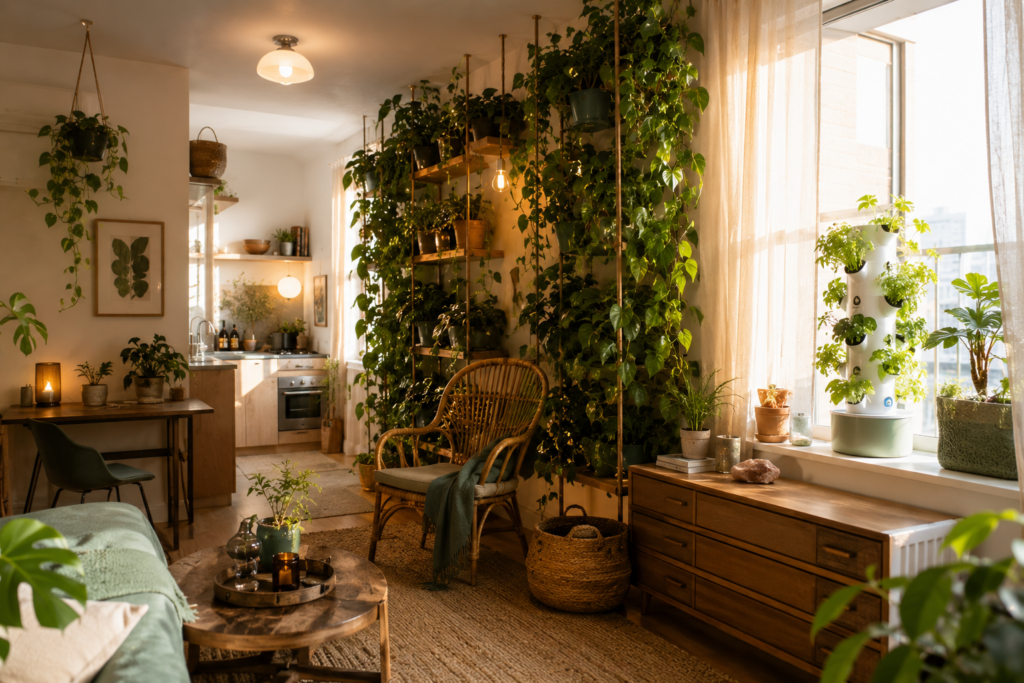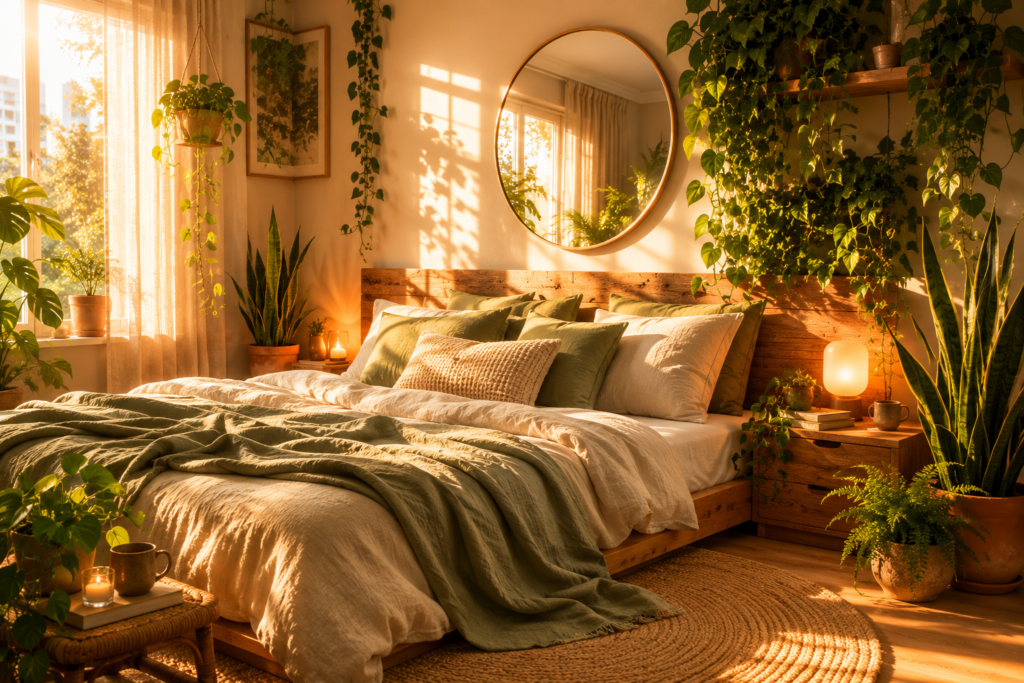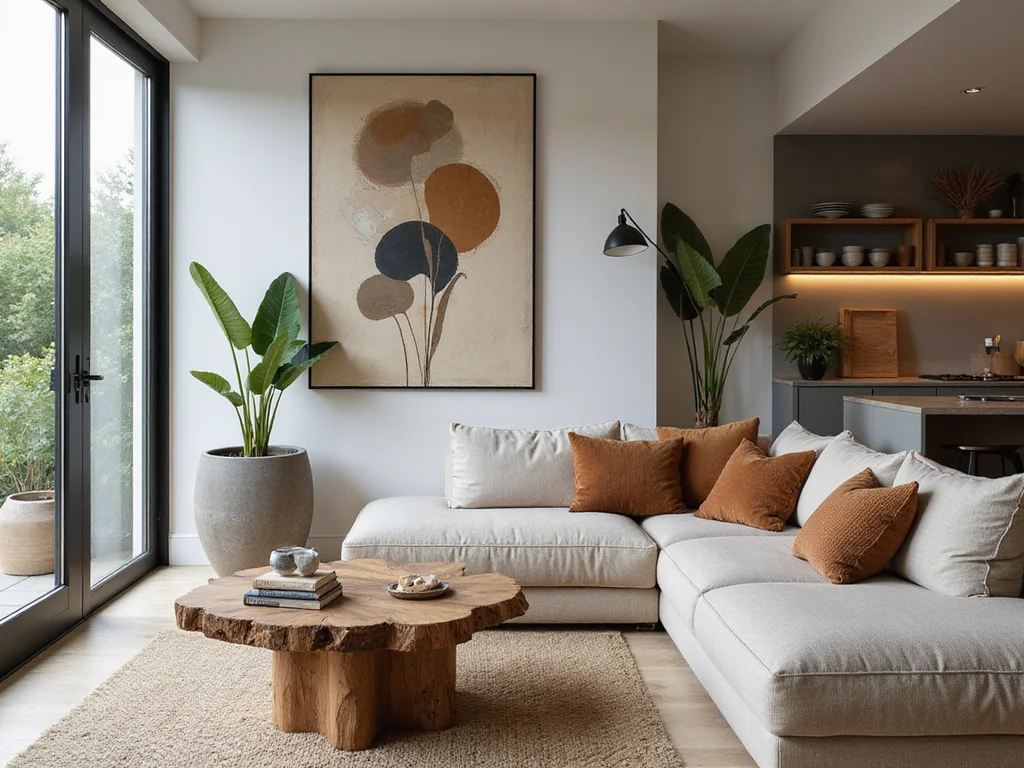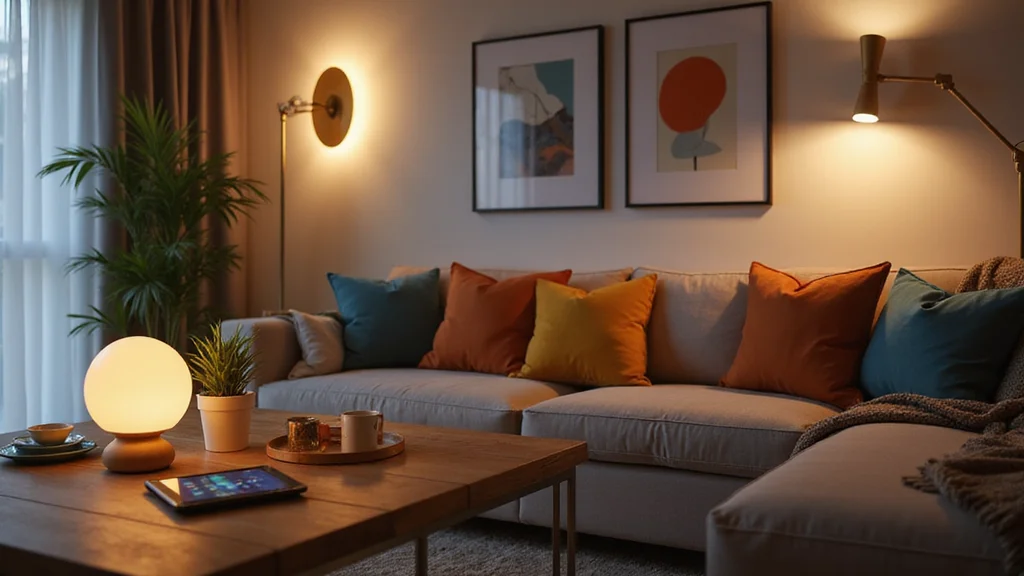

Solarpunk is the rare aesthetic that started as a hopeful idea about the future and turned into a way to decorate a real home. Where most “green” decor stops at a houseplant and a recycled vase, solarpunk decor asks a bigger question: what would a room look like if it genuinely ran on sunlight, plants, and human craft? This guide explains what solarpunk design is, the principles behind it, and how to start using it in an ordinary house or apartment.
The short version: solarpunk decor combines lush planting, salvaged and natural materials, abundant daylight, and quiet renewable technology into a room that feels optimistic and alive. It is biophilic design with a hopeful, slightly futuristic edge.
What is solarpunk design?
Solarpunk design is an aesthetic and philosophy that imagines a future where homes and cities thrive on renewable energy, abundant plant life, and community-made craft. Solarpunk began as a literary and art movement and grew into a decor style defined by greenery, natural materials, and visible, optimistic sustainability. Applied to a room, it pulls together the living plants of biophilic design, the salvage-and-reuse ethic of upcycling, and the warm, hand-made feeling of craft, all lit by as much daylight as the space allows.
What are the core principles of solarpunk decor?
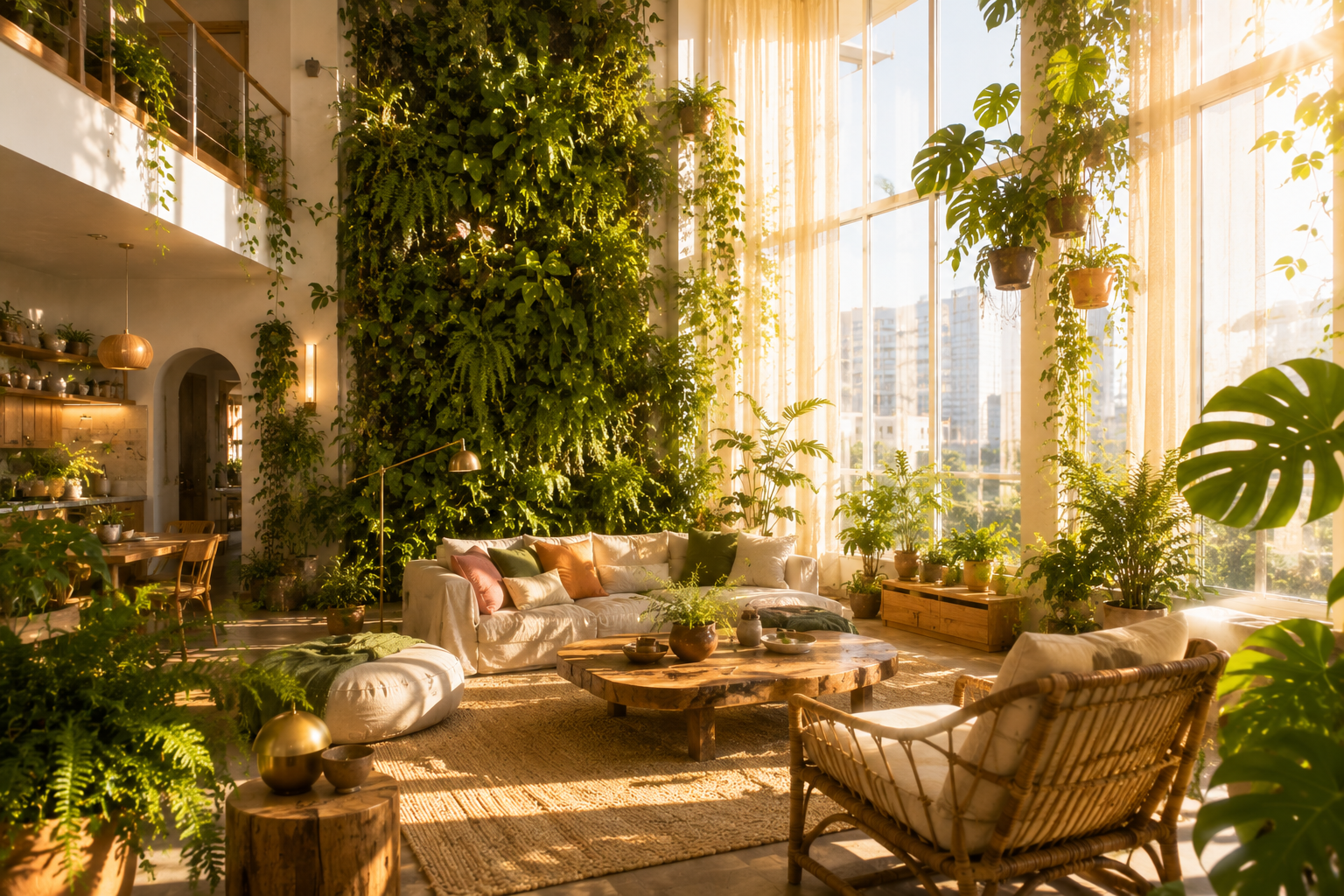
Four principles carry almost every solarpunk room: bring in real nature, reuse before you buy, let daylight lead, and keep technology warm and quiet. Bringing in nature means generous, healthy plants and ideally a green wall, not a single token pot. Reusing before buying favors upcycling and salvaged materials over new flat-pack, which is where sustainable design meets real budgets. Letting daylight lead means designing the room around the window first. And keeping technology quiet means solar lights, hydroponic gardens, and smart bulbs that support the room without dominating it in chrome and blue LEDs.
What materials and colors define the solarpunk aesthetic?
Natural, hand-worked materials in living greens and warm earth tones define the look. Reclaimed wood, rattan, jute, terracotta, washed linen, and aged brass set the texture, and they all improve rather than degrade as they wear. The palette stays warm and grown: moss, fern, and sage greens against oat, clay, and raw timber, with cool grays and stark white kept to a minimum. The principles of permaculture and reuse show up visually here, because the materials look like they came from the earth and could return to it.
How is solarpunk different from cottagecore and biophilic design?
Solarpunk shares their love of nature but points firmly at the future instead of the past. Cottagecore is nostalgic and rural, romanticizing a pre-industrial farmhouse, while solarpunk embraces clean technology, vertical farming, and an optimistic vision of cities that work with nature. Biophilic design is the broader, more neutral practice of connecting interiors to nature, and solarpunk is one expressive, hopeful dialect of it with a distinct color story and a futurist streak. Think of biophilic design as the grammar and solarpunk as the accent.
How do you start decorating in a solarpunk style?
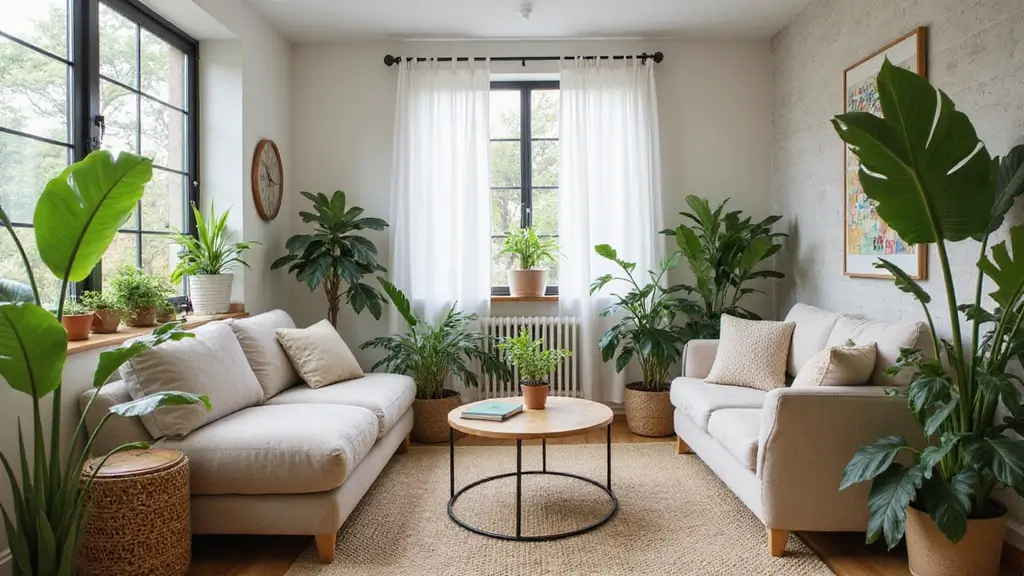
Start with plants and light, because they deliver the most transformation for the least money. Add a dense cluster of forgiving houseplants on one focal wall, swap cold overhead bulbs for warm ones, and hang sheer linen to soften the daylight, and the room already reads solarpunk before you buy any furniture. From there, refinish a secondhand piece, add salvaged-wood texture, and, if you own the space, consider bigger moves like a built living wall or a small rainwater harvesting setup for your plants. Build it gradually and the style grows in naturally.
Is solarpunk decor practical for an everyday home?
Yes, and it is often more practical than it looks, because the core of the style is cheap, removable, and renter-friendly. Plants propagate for free, salvaged furniture costs less than new, and warm bulbs and tension-rod shelving leave no marks behind. The expensive, permanent features like solar panels and built living walls are optional aspirations, not requirements, so any house or apartment can adopt the look at the level its budget and lease allow.
Frequently asked questions about solarpunk decor
What is solarpunk decor in simple terms?
Solarpunk decor is a style that fills a home with plants, natural and salvaged materials, daylight, and quiet renewable technology to create a space that feels green, hopeful, and alive. It is an optimistic, future-facing take on biophilic design.
Is solarpunk just biophilic design?
No, solarpunk is a specific, future-facing dialect of biophilic design. It shares the focus on plants and nature but adds a distinct warm-earth-and-green palette, a salvage-and-reuse ethic, and an optimistic embrace of clean technology that biophilic design does not require.
Do you need to be eco-conscious to decorate solarpunk?
It helps but it is not mandatory, since most solarpunk choices like upcycled furniture and plants are also cheaper and warmer. You can adopt the aesthetic purely for its look and still end up with a more sustainable, lower-waste room as a side effect.
What rooms work best for solarpunk decor?
Every room can go solarpunk, but bedrooms, living rooms, and small apartments show it off especially well. Each gives plants, salvaged materials, and warm light room to shine, and each has its own dedicated DecorDreamr guide to follow.
Ready to decorate room by room? Start with the full solarpunk home ideas guide, then dive into solarpunk bedroom ideas, solarpunk living room ideas, and solarpunk apartment ideas. When you are ready to plan your own space, the free Room Diagnosis turns it into a step-by-step list.