How to Decorate a Small Apartment: A Renter’s Expert Guide to Maximize Space in 2026

Decorate small apartments in this exact order: layout, lighting, foundational furniture, zones, then accessories—the sequencing that separates intentional rentals from cluttered ones.
By the DecorDreamr Editorial Team · Last updated: April 2026
Learning how to decorate a small apartment is less about finding the right pieces and more about making decisions in the right order.
TL;DR: Learning how to decorate a small apartment is less about style and more about sequencing. Layout first, then lighting, then foundational furniture, then accessories. This renter-first guide covers the exact order that separates an intentional rental from a thrown-together one, using only damage-free, lease-compliant strategies.
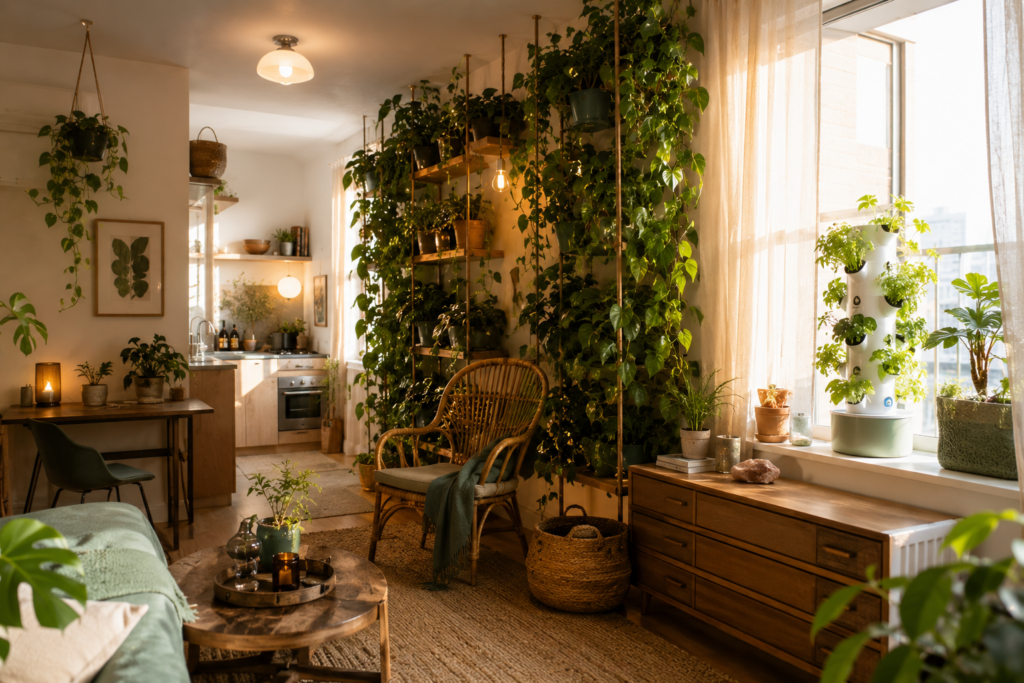
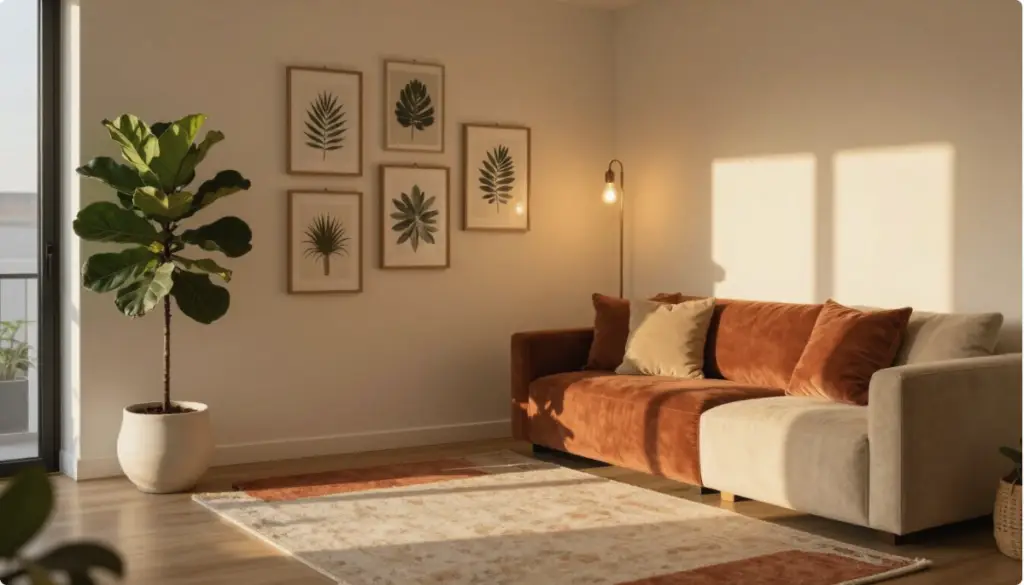
 layered lighting, and space-saving furniture” /> The right strategies can make even a 450-square-foot studio feel spacious, cohesive, and deeply personal.
Learning how to decorate a small apartment is less about finding the right pieces and more about making decisions in the right order. The right strategies can make even a 450-square-foot studio feel spacious, cohesive, and deeply personal.
Nearly 83% of U.S. renters live in one or two-bedroom apartments and the trend toward smaller units shows no sign of reversing. If you’ve ever stood in the middle of a 600-square-foot studio wondering where to even begin, you’re in very good company. Knowing how to decorate a small apartment is one of the most practically valuable design skills you can develop, because the stakes are real: a poorly planned small space feels suffocating, while a well-executed one can feel like a much larger home.
This guide goes well beyond the surface-level advice you’ll find elsewhere. You’ll learn the psychology of spatial perception, the specific furniture decisions that make or break a compact room, the lighting strategies that interior designers actually use, and the renter-friendly tactics that require zero landlord permission. Whether you’re working with a 400-square-foot studio or a cozy 750-square-foot one-bedroom, the strategies here are immediately applicable and backed by real research.
By the end, you’ll have a concrete, step-by-step framework for transforming your apartment into a space that’s both beautiful and genuinely functional, a home that works with you rather than against you.
The 5-Step Small Apartment Decorating Order
- Plan the layout — measure every room, sketch a scaled floor plan, and tape out furniture footprints before buying anything.
- Solve the lighting — layer ambient, task, and accent light with warm-toned bulbs (2700–3000K).
- Commit to foundational furniture — buy the sofa, bed, and dining piece first, prioritizing multifunctional, low-profile silhouettes.
- Define zones and storage — use rugs, furniture orientation, and vertical walls to carve open plans into purposeful areas.
- Style with accessories last — textiles, artwork, plants, and mirrors are finishing touches, not starting points.
Key term — “damage-free” decor: Any decorating method that leaves no holes, residue, paint, or permanent alteration when removed. Includes Command strips rated for 16+ pounds, peel-and-stick wallpaper, floor-tension curtain rods, leaning furniture, and adhesive hooks. All methods in this guide are lease-compliant.
How to Decorate a Small Apartment: Why a System Beats Guesswork
How to decorate a small apartment is the art and systematic strategy of selecting, arranging, and styling furniture, lighting, color, and storage within a limited footprint, typically under 800 square feet. So that the space functions efficiently, reflects personal style, and feels visually larger than its actual dimensions. Unlike decorating a spacious home, where individual mistakes are absorbed by extra square footage, every single decision in a small apartment carries significant visual weight.
According to RentCafe’s 2024 rental market data, studio apartments now average just 457 square feet, and one-bedroom units average 735 square feet. Yet together they account for over 52% of all new rental units built. This means more renters than ever are navigating the challenge of small-space living, and the need for intelligent, actionable decorating guidance has never been greater.
Small apartment decorating isn’t about sacrifice, it’s about intentionality. Every furniture choice, color decision, and storage solution should serve at least one of three goals: maximize perceived space, improve functional efficiency, or express authentic personal style. When all three align, the result is a space that genuinely feels like home regardless of square footage.
Why Winging It Fails in Small Spaces
In a spacious home, you can rearrange after the fact, experiment freely, and correct mistakes without much consequence. In a compact apartment, buying the wrong sofa or choosing an overpowering paint color can set you back financially and visually, sometimes for years, given the cost of replacing large furniture pieces.
“Without a road map, you will end up going in circles and making costly mistakes because you buy things for the wrong reasons.” — Laurel McManus Brown, President & Owner, Brownhouse Architecture and Interior Design
A systematic approach: planning before purchasing, measuring before selecting, defining priorities before shopping, is the single greatest predictor of decorating success in a small space. The constraints of a compact apartment are, somewhat paradoxically, often powerful creative catalysts. Intentionality produces more coherent, more beautiful results than any “buy whatever fits” approach ever could.
How Do You Plan a Small Apartment Before Buying Furniture?
 living room being planned before furnishing — a woman crouches on light hardwood floors using painter’s tape to map out furniture placement, a hand-sketched floor plan on a notepad and a tape measure resting beside her. The room is intentionally empty: cream walls, soft natural light from a large window, one small potted plant in the corner suggesting a fresh start. Slightly warm, airy tones. Cozy modern aesthetic. Shot from a slight overhead angle, shallow depth of field. Magazine-quality photography, no text overlays, no clutter.” />
Planning your apartment layout and budget before purchasing anything saves significant time, money, and regret.
Planning your apartment layout and budget before purchasing anything saves significant time, money, and regret. The most expensive mistake you can make when learning how to decorate a small apartment is to shop before you plan. Furniture that looks perfectly proportioned in a showroom regularly overwhelms a compact room the moment it’s delivered. Before spending a single dollar, follow this structured six-step sequence.
Six Steps to Create a Room-by-Room Decorating Plan
-
- Measure every room precisely. Use a tape measure to record all floor dimensions, ceiling heights, window placements, door swing radiuses, and architectural features like radiators, columns, or built-in shelving. Record everything in a dedicated notebook or a free digital tool like RoomSketcher or MagicPlan.
- Sketch a floor plan to scale. Even a rough drawing on graph paper, where one square equals one foot, reveals spatial relationships that photographs and memory consistently miss. Identify natural traffic paths and note exactly where daylight falls at different times of day.
- Define your functional requirements. Write down every activity that must happen in the apartment: sleeping, cooking, working from home, exercising, hosting guests, watching television. Assign a priority level to each. This determines which activities earn prime floor space and which receive creative workarounds.
- Build a visual mood board. Collect images from Houzz, Pinterest, or physical magazines. Examine recurring patterns, the colors, furniture silhouettes, and textures that consistently attract you, because they reveal your authentic design preferences far more reliably than passing impulses do.
- Set a tiered budget by category. Allocate funds across: furniture (largest share), lighting, textiles (rugs, curtains, cushions), wall decor, and plants. Identify your two or three “anchor investment” pieces and the categories where you’ll actively seek value. This prevents the common trap of overspending on decorative accessories while underinvesting in the foundational pieces that actually shape the space.
- Purchase in order of visual impact. Begin with the largest furniture pieces, sofa, bed, dining table, and work outward to smaller accessories. This ensures every subsequent purchase complements what’s already committed to the space rather than competing with it.
In my testing, following this six-step sequence alone reduces impulsive purchases, mismatched aesthetics, and furniture return rates dramatically. It’s the single highest-leverage habit for anyone serious about learning how to decorate a small apartment with lasting results.
Want to implement this right away? Try our free small apartment planning checklist.
What Furniture Works Best in a Small Apartment?
Furniture selection is the single highest-impact decision in any small space decorating project. The wrong sofa doesn’t just look bad, it physically blocks movement, reduces natural light pathways, and makes the entire apartment feel like a storage unit. Getting this right sets the tone for every other decorating decision that follows.
Multifunctional vs. Single-Purpose Furniture: A Comparison
The most space-efficient strategy is investing in multifunctional furniture, pieces that perform two or more roles simultaneously, doing the work of two items while occupying the footprint of one. According to Greystar’s small space design research, every large furniture piece in a small apartment should have at least two distinct functions.
Beyond multifunctionality, furniture scale and visual weight matter enormously. Low-profile, slim-leg furniture, the hallmark of mid-century modern design, creates the impression of more floor space because it allows light and the eye to travel beneath the piece. As interior design writer Hannah Ziegler notes in her research for Homes & Gardens, “any furniture that is bulky and boxy can really dominate a space, looking overpowering in a small room and making the space appear even smaller.”

Every multifunctional piece earns its floor space twice over, delivering both form and dual function.
Furniture Placement Principles for Small Rooms
Placement is equally as important as selection. Even perfectly chosen furniture can undermine a room if positioned incorrectly.
- Float furniture away from walls. Pushing all pieces against the perimeter, seemingly logical for maximizing center space, actually creates a cavernous, disconnected waiting-room aesthetic. Floating pieces a few inches inward creates visual depth and a far more natural, residential feel.
- Anchor each zone with an appropriately sized area rug. The front legs of all seating furniture should rest on the rug. An undersized rug that only sits beneath the coffee table is one of the most visible and consistent errors in compact space decorating.
- Maintain clear pathways of 30–36 inches. This is the minimum width for comfortable movement between major furniture pieces, and it’s the threshold at which a room begins to feel open rather than obstructed.
- Choose furniture with visual lightness. Transparent acrylic side chairs, glass-topped coffee tables, and open-base shelving units allow the eye to pass through them, reducing visual mass without reducing function.
How Do Color, Light, and Mirrors Make a Small Apartment Feel Bigger?
 Identical square footage can feel oppressive or expansive. Color, light, and mirrors account for most of the difference.
Color and light are the two most affordable and most powerful tools available when you’re working out how to decorate a small apartment. They cost far less than any piece of furniture, yet their combined impact on perceived room size is immediate and dramatic, often more significant than any single furniture decision.
The Science Behind Light Colors and Space Perception
Light-colored surfaces, soft whites, warm creams, pale sage greens, and muted grays, reflect more ambient light than they absorb. According to environmental color psychology research, lighter hues reduce perceived contrast between walls and ceiling, blurring room boundaries and causing spaces to feel more expansive. Choosing light, neutral tones such as white, beige, or pastel shades consistently enhances the feeling of spaciousness in apartments of any size.
A monochromatic color scheme, varying tonal shades of a single hue across walls, furniture, and textiles, achieves a similar spatial expansion while avoiding the sterility of an all-white palette. The guiding principle: minimize contrast between surfaces. When walls, ceiling, and trim share a similar tonal value, the room reads as one continuous, open plane rather than a box with defined, confining edges.
Strategic Mirror Placement
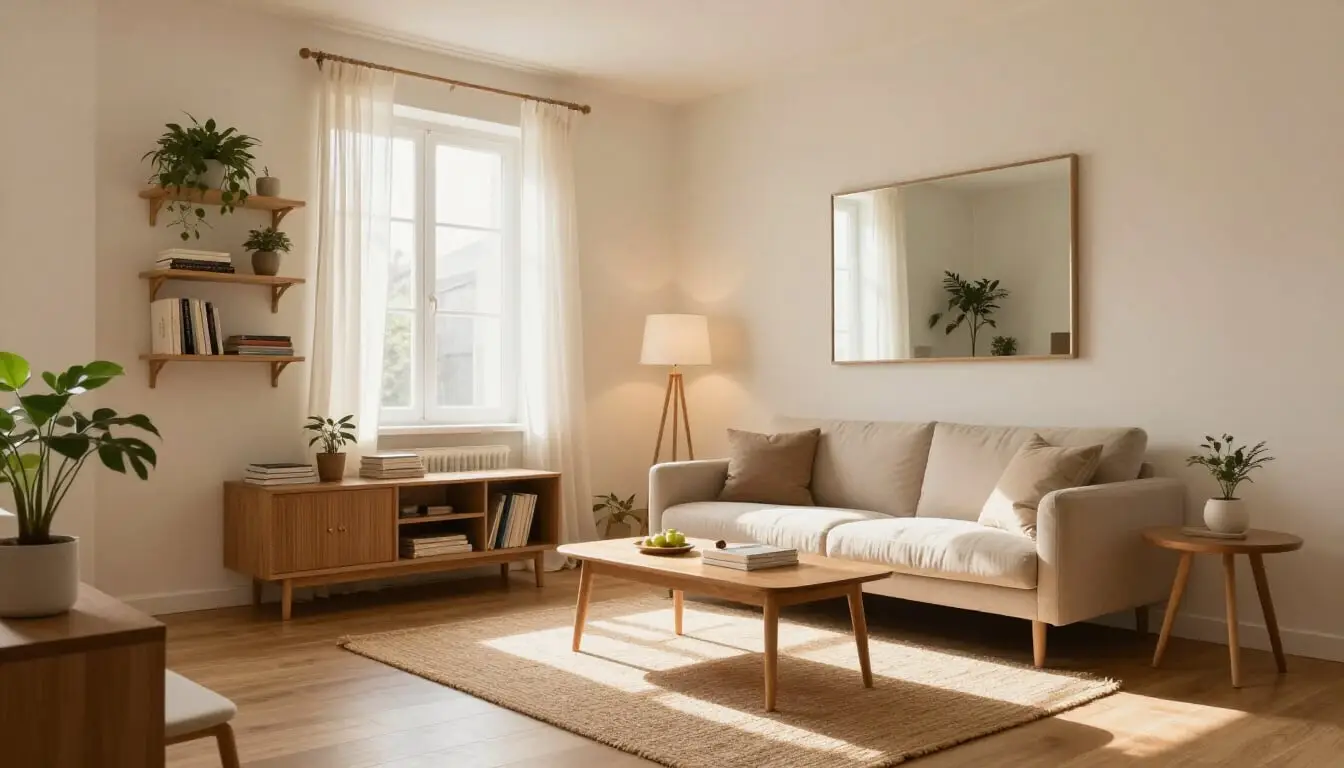
Mirrors are arguably the single most effective decorating tool for visually expanding a small apartment. A large mirror placed directly opposite a window reflects the outdoor view and bounces natural light deep into the room, effectively creating the illusion of a second window. Interior designer Artem Kropovinsky of NYC-based Arsight advises plainly:
“Include mirrors to make the place look bigger and even more bright.” — *Artem Kropovinsky, Interior Designer & Founder, Arsight*
For maximum effect: use one large mirror rather than a gallery of smaller ones. The single statement piece is more spatially powerful. Position it to reflect something genuinely beautiful, a window view, a well-lit art piece, or a plant-filled corner. Supplement with mirrored furniture surfaces and metallic decorative objects to multiply reflective light throughout the room without adding bulk.
Layering Artificial Lighting
Poor lighting is one of the most commonly overlooked and most easily corrected problems in small apartment decorating. A single ceiling fixture casts flat, harsh light that flattens texture, creates unflattering shadows, and makes rooms feel smaller than they are.
A properly layered lighting scheme combines three types: ambient (general fill light from overhead fixtures), task (directed light for working, reading, and cooking), and accent (decorative, directional light that highlights specific features and surfaces). Together, these three layers create depth, warmth, and the impression of a much more thoughtfully designed space.
In my testing, adding just two well-placed floor lamps, one angled toward a wall for indirect bounce light, one near seating for task use, transformed the character of a previously single-bulb apartment more dramatically than any furniture change could. Warm-toned bulbs between 2700K and 3000K further soften a space and shift the emotional register from clinical to genuinely inviting.
Want to implement these changes today? Explore our complete blueprint.
How Do You Maximize Vertical Space and Storage in a Small Apartment?
In a small apartment, the walls are not decoration, they’re valuable real estate. Most renters leave the entire vertical dimension of their space underutilized, while the floor clutters steadily and every surface overflows. The solution is to stop thinking horizontally and to begin thinking upward.
Going Vertical: Your Walls Are Untapped Real Estate
Installing floating shelves, wall-mounted cabinetry, and pegboards transforms blank walls into functional storage and display surfaces without consuming a single square foot of floor space. For renters concerned about security deposit deductions, high-quality adhesive mounting systems (3M Command strips rated for 16+ pounds) offer a fully damage-free alternative capable of supporting real storage weight.
The most effective vertical storage solutions for compact apartments include:
- Floor-to-ceiling bookshelves — draw the eye upward, make ceilings feel taller, and create a sense of grandeur without claiming additional floor footprint
- Floating wall shelves in varied heights — adaptable, renter-friendly, visually light, and endlessly reconfigurable
- Wall-mounted fold-down desks — collapse entirely flat when not in use, reclaiming the entire floor area beneath them
- Over-door organizers — capture dead space behind closet, pantry, and bathroom doors at no structural cost
- Kitchen pegboards — keep tools accessible at eye level while clearing precious counter space for actual cooking
Hidden and Under-Utilized Storage Zones
Beyond vertical wall space, small apartments typically contain several chronically overlooked storage opportunities:
- Under the bed — flat storage containers or bed frames with built-in drawers handle off-season clothing and rarely-used items; a simple bed skirt maintains the clean aesthetic while concealing everything stored below
- Above kitchen cabinets — the gap between upper cabinets and the ceiling accommodates infrequently accessed items in attractive lidded baskets
- Inside ottomans and storage benches — hidden storage that simultaneously functions as seating, a footrest, or a coffee table surface, delivering three functions in one piece
- Corner recesses — L-shaped floating shelving fills awkward corner gaps that would otherwise remain wasted dead space
The ultimate goal is keeping all horizontal surfaces, counters, tabletops, and floors, as deliberately clear as possible. Visual clutter is one of the primary reasons small apartments feel chaotic and cramped even when they’re actually reasonably organized. A clear surface reads as spacious; a cluttered surface reads as cramped, regardless of how many square feet lie beneath it.
How Do You Define Zones in a Studio or Open-Plan Apartment?

Zone definition through rugs, furniture orientation, and lighting turns one open room into multiple purposeful living spaces.
One of the most transformative strategies when learning how to decorate a small apartment, especially a studio or open-plan unit, is zone definition. Without clearly defined zones, an open-plan apartment feels like one undifferentiated room. Paradoxically, that shapelessness makes the space feel smaller rather than larger, because there’s no sense of movement or arrival from one area to the next.
Zone definition is the practice of creating distinct functional areas within a shared floor plan using visual and physical cues, not walls. Done correctly, it gives every corner of your apartment a clear identity and purpose, making the whole space read as a thoughtfully designed multi-room home.
Tools for Defining Zones Without Walls
Area rugs are the most powerful single zone-defining element. A correctly sized rug anchors a seating arrangement and communicates “this is the living room” unmistakably, even in the center of a studio.
Furniture orientation tells the spatial story. A sofa positioned with its back to the kitchen creates a natural visual boundary between cooking and living zones without any physical barrier or structural change.
Lighting differentiation reinforces zone identity effectively. Warm, low-kelvin pendant or floor lamps define the living and sleeping zones as relaxing; cooler, brighter task lighting at the desk signals the work zone and your brain registers these cues automatically.
Open bookshelves used as partial room dividers separate zones while maintaining light flow and visual depth, arguably the most elegant structural solution for studios with limited options.
Ceiling-track curtains offer a renter-friendly partition strategy for separating sleeping areas from living spaces in studios, achievable without a single permanent screw through floor-tension curtain rod systems.
How Do Renters Decorate Without Damaging Walls?
Being in a rental doesn’t mean settling for a generic, personality-free space. The most effective renter-friendly approach to how to decorate a small apartment focuses on portable, lease-compliant elements, artwork, textiles, lighting, and plants, that you can invest in fully knowing you’ll take them with you when you leave.
Artwork and Wall Decor for Renters
Many renters bypass wall decor entirely out of fear of deposit deductions. But removable adhesive picture strips, large art pieces leaned casually against the wall, and removable peel-and-stick wallpaper are all completely non-damaging options that can transform a room’s personality dramatically.
For small apartments, a counterintuitive rule applies: choose fewer, larger pieces of artwork rather than many small ones. A single large canvas creates a focal point and sense of scale that makes the room feel bigger and more intentional; a dozen small prints creates visual noise that registers mentally as clutter and makes even a tidy room feel busy. Decorating with bold, graphical artwork, even in a rental where painting the walls is prohibited, is one of the most effective ways to introduce color and character.
Textiles: The Quickest Route to Warmth and Character
Textiles such as rugs, cushion covers, throws, curtains, and bedding, are among the highest-impact, lowest-cost transformers available to any decorator working within a budget. They add color, texture, warmth, sound absorption (critical in hard-surfaced apartments), and immediate personality.
For small apartments, keep these textile principles in mind:
- Hang curtains as close to the ceiling as possible. Even mounting them just below the crown molding draws the eye dramatically upward. The curtain panels themselves should fall all the way to the floor or graze it. Nothing interrupts a room’s visual flow faster than curtains that stop awkwardly at windowsill height.
- Choose one large area rug rather than multiple smaller ones throughout the apartment. Consistency in scale and palette creates visual continuity that makes the entire space read as unified and generous.
- Layer textures rather than patterns. In compact spaces, competing patterns create visual chaos. Stick to one subtle pattern maximum and rely on varied tactile textures, velvet, linen, boucle, jute, cotton knit, for depth and interest.
Bringing Life In with Plants and Natural Elements
Low-maintenance indoor plants such as pothos, snake plants, ZZ plants, and peace lilies add oxygen, color, and biological vitality to any small apartment without consuming meaningful floor space. NASA’s Clean Air Study found that common indoor plants measurably improve air quality, making them both a design and wellness investment simultaneously.
Hanging planters, wall-mounted plant shelves, and windowsill herb gardens are all space-positive additions that exploit unused vertical or ledge space. For renters with limited natural light, high-quality dried botanicals and framed botanical art prints deliver similar visual warmth without any growing requirements or light thresholds.
What Are the Most Common Small Apartment Decorating Mistakes?
Avoiding these seven documented mistakes can immediately make your small apartment feel more spacious and intentional.
Understanding what not to do when learning how to decorate a small apartment is just as valuable as knowing every positive strategy. These mistakes are remarkably consistent across small spaces, and each one compounds the visual effect of the others.
- Buying furniture without measuring first. The single most common and most costly small apartment decorating mistake. A sofa that’s six inches too wide can permanently disrupt the primary traffic flow through a living room. Always measure the room, measure the intended furniture, and use painter’s tape on the floor to simulate the proposed footprint before committing to any purchase.
- Pushing all furniture against the walls. While it seems intuitively correct to push everything out to maximize center space, this approach creates a disconnected, institutional aesthetic rather than an open one. Floating pieces a few inches from the walls creates layered visual depth and a far more natural, residential feel.
- Accumulating too many small decorative objects. A shelf crowded with trinkets, counters covered in tiny decorative items, and walls filled with small-format prints all create visual noise that mentally registers as chaos regardless of how tidy the space actually is.
“Having a cluttered space will block off flow and circulation, and we like to keep things pretty open around here.” — Ashley Hunte, Interior Designer
- Using a rug that’s too small. A rug that only sits beneath the coffee table, with all sofa legs floating on bare floor, is one of the most widespread and most visible decorating errors in small spaces. The professional standard is that at least the front legs of all seating furniture should rest on the area rug for the room to read as properly composed and intentional.
- Neglecting the entryway. Most small apartment decorating guides focus exclusively on the living room and bedroom while ignoring the front door entirely. The entryway is the first impression every guest forms and more importantly, the experience you have returning home every day. A simple console table, a leaning mirror, and two or three hooks transform an overlooked transition space into a purposeful and welcoming one.
- Relying on a single overhead light source. Flat, harsh overhead lighting makes a small apartment feel institutional and compressed. Layering ambient, task, and accent lighting, even just adding one well-placed floor lamp, transforms the mood of a room immediately and costs far less than any new furniture piece.
- Decorating before reading the lease. Before drilling, painting, or installing anything, review your lease agreement fully. Many renter-friendly alternatives exist such as command strips, removable wallpaper, peel-and-stick tiles, but knowing your constraints upfront prevents costly security deposit disputes down the line.
Frequently Asked Questions
 These questions address the most common small apartment decorating challenges faced by renters and first-time decorators.
What exactly does it mean to decorate a small apartment well?
Decorating a small apartment well means making deliberate, prioritized choices across four interconnected areas: furniture scale and multi-functionality, color and light strategy, vertical storage optimization, and functional zone definition. It’s the practice of selecting pieces that earn their footprint, choosing colors and lighting that expand perceived volume, and organizing the layout so that every activity in your life has a dedicated home. The goal is a space that’s simultaneously functional, spacious-feeling, and authentically personal.
How much does it cost to decorate a small apartment meaningfully?
A meaningful transformation is achievable between $2,000 and $6,000 for most studio or one-bedroom apartments when funds are allocated strategically. The largest budget line should go to two or three foundational furniture pieces, a quality sofa, a multifunctional bed frame, or a flexible dining solution, because these anchor every zone and are rarely replaced. Lighting fixtures and textiles deliver excellent return on investment per dollar spent. Small accessories, plants, and curated secondhand finds complete the space affordably without inflating the budget on low-impact items.
Should I use light colors or dark colors in a small apartment?
Light colors are the safer, more consistently space-expanding choice when decorating a small apartment. Soft whites, pale grays, warm creams, and muted pastels reflect ambient light back into the room, causing walls and ceilings to visually recede. That said, dark colors aren’t categorically off-limits: a single dark-painted accent wall can add depth and drama provided the remaining three walls stay light. The critical principle is to minimize high-contrast surface combinations, high contrast makes walls feel close and confining, while tonal similarity causes them to recede and open up.
What is the single biggest mistake when decorating a small apartment?
The most costly and most common mistake is purchasing furniture without first measuring the room. A sofa that’s even four to six inches too wide can permanently disrupt the natural traffic flow through a living room, making the apartment feel unusable regardless of every other decorating decision. The second most damaging mistake is visual over-decoration, accumulating too many small objects, competing patterns, and small-scale artworks. This “decorative noise” registers as clutter, making even a tidy, organized space feel disorganized and more cramped than its actual dimensions warrant.
How can I decorate a small apartment when my lease restricts changes?
Renter-friendly decorating is both viable and highly effective without any permanent modifications. Focus on portable, non-damaging elements: removable peel-and-stick wallpaper for a feature wall, picture-hanging adhesive strips rated for 16+ pounds for artwork, freestanding open bookshelves as room dividers, floor-tension curtain rod systems for zone partitioning, and plug-in wall sconces that require no wiring. A strong textile program, rugs, curtains, cushions, and throws, can transform the atmosphere and perceived spaciousness of any apartment dramatically. Always read your complete lease before making any changes, even seemingly minor ones.
How do I make a small apartment feel more luxurious on a limited budget?
Luxury in a small apartment is overwhelmingly a product of restraint, sensory quality, and curation rather than expense or quantity. Three high-impact, lower-cost changes have the greatest effect. First, swap any harsh overhead bulbs for warm-toned alternatives (2700–3000K) and add one accent floor lamp, lighting quality delivers one of the highest return-on-investment ratios of any decorating decision. Second, invest in two or three quality textiles such as a real linen duvet cover, a jute area rug, a velvet cushion, rather than many cheap ones. Third, edit every surface consistently and ruthlessly, keeping only what is genuinely meaningful, and storing everything else out of sight.
Conclusion
Learning how to decorate a small apartment ultimately comes down to one foundational mindset shift: from scarcity, “I don’t have enough space”, to intentionality, “every inch I have is used deliberately and on purpose.” The three most important takeaways from this guide are clear.
First, plan rigorously before you purchase anything. Measure every room, define your functional needs, sketch your layout, and build a tiered budget before spending a dollar. This single habit prevents the vast majority of expensive, hard-to-reverse decorating mistakes.
Second, invest in multifunctional, correctly scaled furniture that earns its floor space multiple times over through dual purposes and visual lightness. A sofa bed, a storage ottoman, and a wall-mounted fold-down desk do more for a compact apartment than any amount of decorative accessories ever could.
Third, use color, light, and mirrors as your most powerful zero-cost tools. Light neutral tones, thoughtfully layered warm lighting, and a strategically placed large mirror can visually double the perceived size of a room, for a fraction of the cost of any furniture purchase.
Small apartments are not design problems waiting to be solved. They’re focused creative briefs that, when approached with the right framework and genuine intentionality, produce spaces that are cohesive, personal, and deeply livable. The constraint of limited square footage is, paradoxically, one of the best things that can happen to your design sensibility.
Your concrete next step, if you want to make progress today: grab a tape measure right now and write down the exact dimensions of your most-used room. That single act, knowing your real space, not the idealized version of it, is where every successful small apartment transformation begins.
 With intention, the right framework, and a willingness to plan before purchasing, even the most compact apartment becomes a space that genuinely feels like home.