How to Make a Cheap Apartment Look Expensive: An Interior Design Field Guide

The short version: a cheap apartment starts to look expensive once you fix the lighting, stop scattering so many small things around, and bring in a material or two that is honestly what it claims to be. Most of that costs nothing and needs no sign-off from a landlord.
A quick note: a few of the product links below go to Amazon. As an Amazon Associate, DecorDreamr earns from qualifying purchases, at no extra cost to you.
Almost every apartment I have rented came with the same ceiling light. You know the one. A frosted glass dome bolted to the middle of the room that turns everything the color of a dentist’s waiting area around 7pm.
For a long time I assumed my places looked cheap because my stuff was cheap. That wasn’t really it. The furniture was mostly fine. What I hadn’t worked out yet was the gap between a room that costs a lot and a room that only looks like it does, and those two things overlap a lot less than the showrooms want you to believe.
So before you buy a single thing, here is what your eye is actually reacting to when it decides a place looks cheap:
- Light that all pours down from the ceiling.
- A scatter of colors that never repeat.
- Surfaces that are all hard and shiny at the same time.
- A dozen little objects doing the job of two big ones.
- Curtains that stop dead at the window frame.
- Furniture shoved flat against every wall.
Not one of those is a money problem. Work through them roughly in that order and most people can skip the shopping part.
How do you make a cheap apartment look expensive?
You make a cheap apartment look expensive by fixing three things, in this order: the light, the amount of stuff, and the honesty of the materials. Pretty much everything else follows from those.
The first move is just editing what you already own. Drag a lamp somewhere new, pull the couch a hand’s width off the wall, take a shelf down to the two or three things you would actually miss. That is interior design with the fun shopping part removed, and it is free.
When you do spend, spend in order. Warm light first, then one real textile, then one larger object that lets you retire a cluster of small ones. The usual mistake is leading with little accessories, which is how forty dollars disappears and the room looks exactly the same as before.
Why does cheap lighting make the whole room look cheap?
Because a single ceiling light flattens everything and wipes out the shadows that make a room look built. Overhead lighting hits every surface at the same brightness, which happens to be the exact look of a leasing-office listing photo.
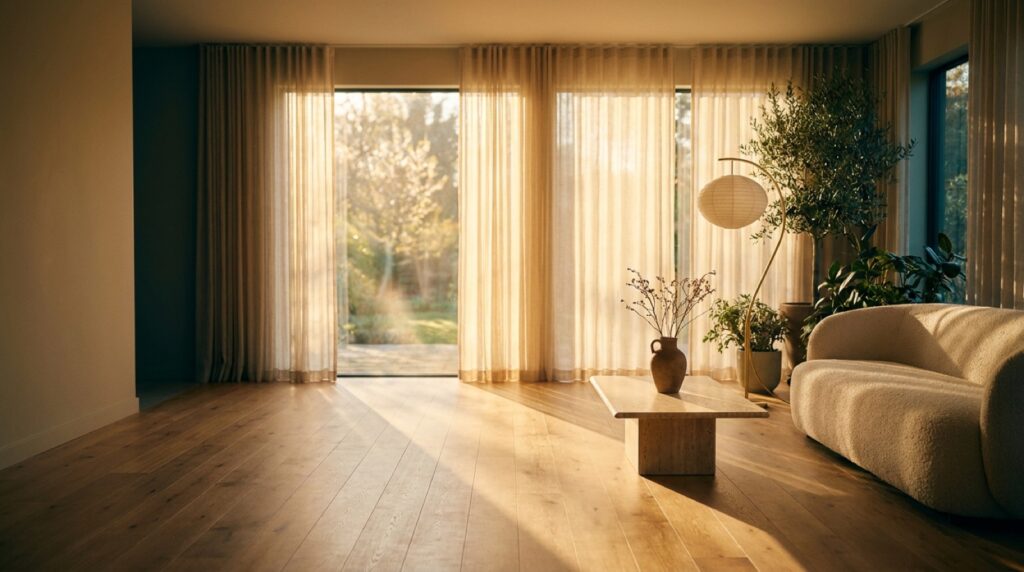
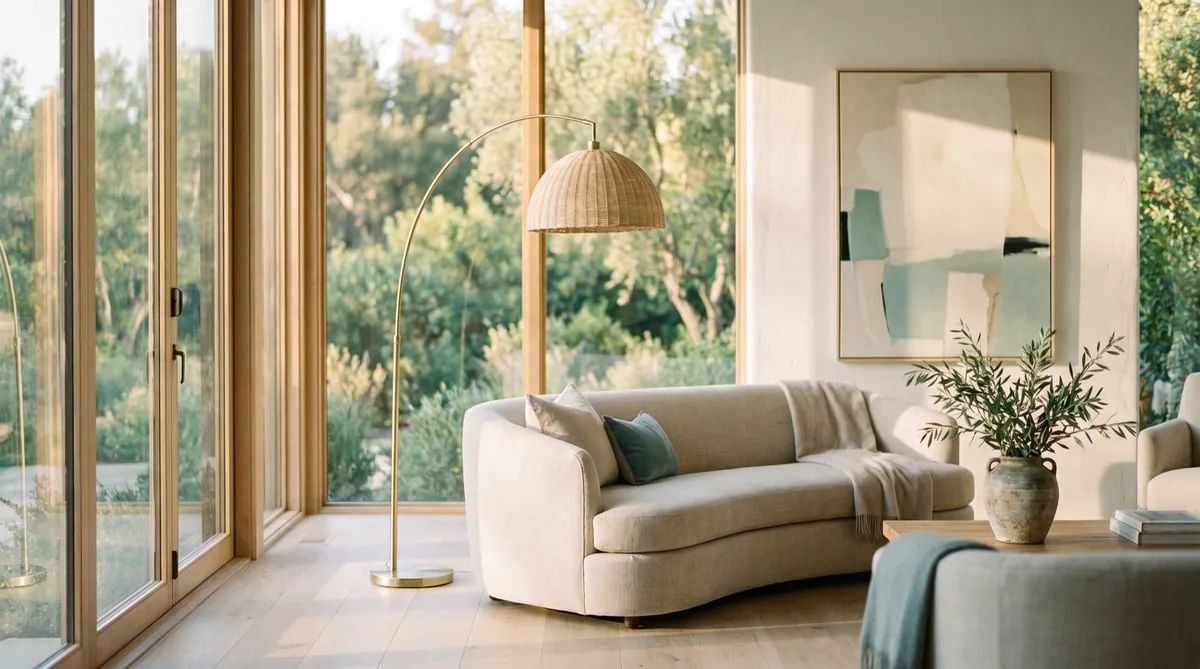
Expensive rooms light low instead. A floor lamp in a corner. A small lamp on a bookshelf. Two or three warm sources you flip on at night while the ceiling fixture stays off completely. Get 2700K bulbs (the box usually says soft white) so the light goes gold rather than that blue-white office tone.
This is the cheapest big win on the list. A thrift-store lamp and a warm bulb can turn a dead corner around for less than the cost of lunch. The lamp barely matters on its own. What you are actually paying for is the pool of shadow it puts around it.
What colors make a small apartment look more expensive?
Fewer colors, repeated on purpose, read as more expensive than a lot of colors used once each. Pull three tones out of things already in the room, then make each one turn up at least twice.
The cheap-looking apartment is almost never too plain. It is too loud. A blue pillow, a green throw, a mustard print, a red mug, every object arguing in a different language. Quiet it down to a small color scheme and let it echo around the room. Warm neutrals plus one grounded accent, rust or olive or ink, whatever you have got, is a hard look to get wrong.
It is also why a lone accent pillow never rescues anything. One of something reads as an accident. Two or three of it read as a decision, which is most of what color theory is quietly telling you. And you do not need a fancy name for the palette. Cream, walnut, rust. Say it plain, then make the room back it up. A little minimalism in the color story buys a surprising amount of polish for nothing.
Do materials like linen and velvet really look expensive?
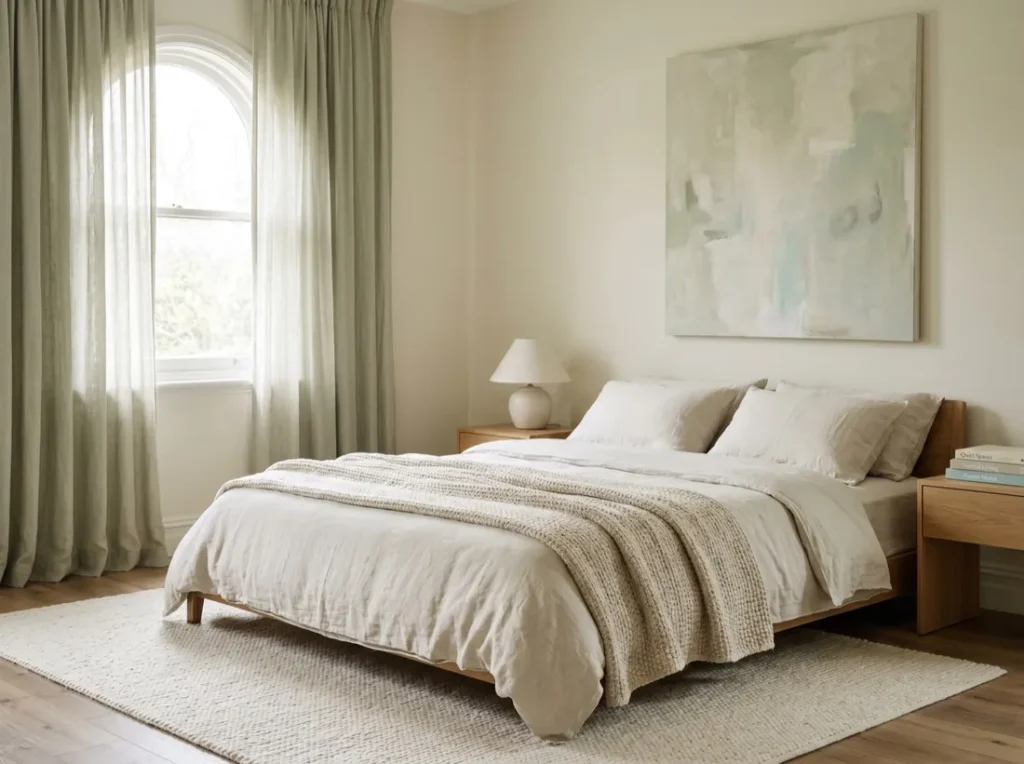
Yes, because a material that is actually what it claims to be catches light differently than plastic, and the eye clocks it before you have consciously noticed. The quickest swap is a curtain or a cushion cover in linen, which creases and drapes in a way that reads as money even when it cost twenty bucks.
The trick is contrast. Put something soft against something hard. A velvet cushion on a plain sofa, a rattan basket beside a laminate shelf, a wool-ish rug under a glass table. A room where every surface is hard and shiny will always look cheaper than one with a couple of textures soaking up the light, even at the same receipt total.
What gives the game away up close is the fake stuff trying too hard. Shiny faux silk, the thin printed linen-look panels stretched tight, plastic doing a marble impression. Cheap but honest beats expensive but fake nearly every time.
Can a few brass details make a rental look high-end?
A little warm metal anchors a room and reads as deliberate, as long as you do not mix four finishes at once. Brass or aged gold on a lamp base, a clip-on picture light, a couple of drawer pulls, one frame, that is enough to add a quiet richness flat black never quite manages.
For renters the appeal is that metal is reversible. Screw-in or stick-on pulls, a clip light, a lamp you take with you, none of it goes anywhere near the deposit. You are borrowing the finish, not installing it.
The only way to wreck it is to keep going. Two or three warm-metal moments in a room is about the ceiling. Past that the metal stops reading as rich and starts reading as a themed restaurant.
What is the one cheap-looking mistake almost everyone makes?
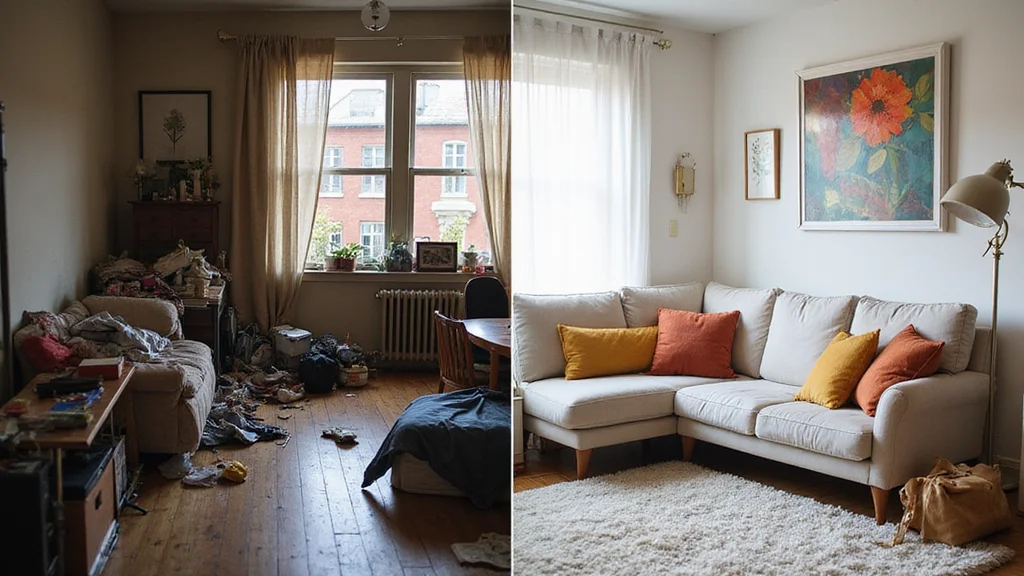
Buying a lot of small things instead of a few big ones, which quietly drags the whole room down. Little frames, little plants, little trinkets, they pile up into visual static, and static reads as clutter no matter what each piece cost.
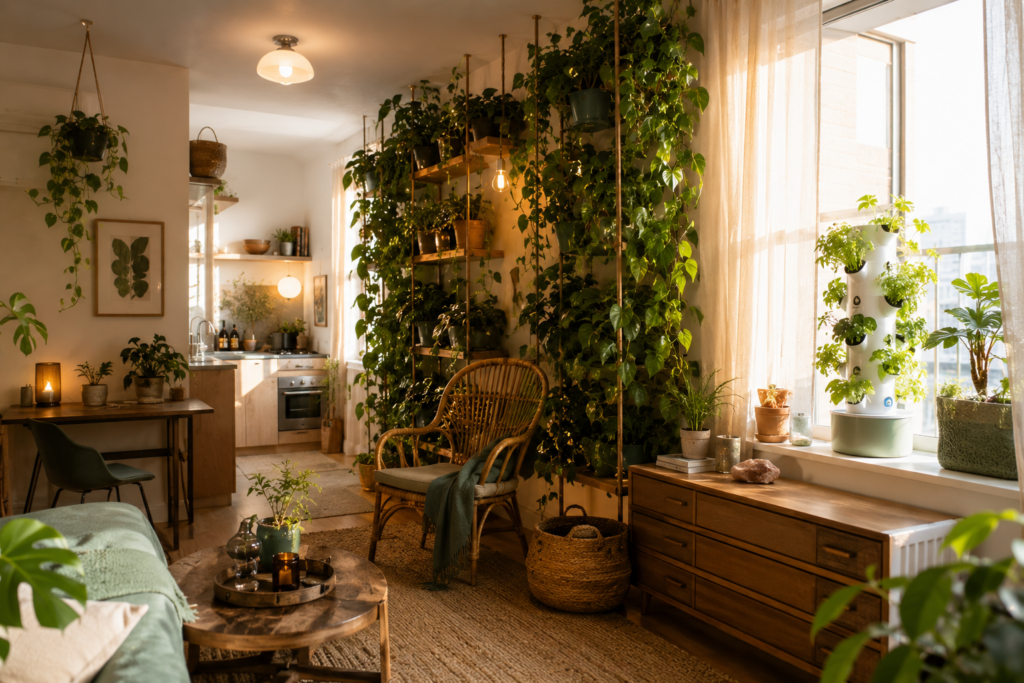
Expensive rooms have room to breathe. One big piece of art does more than nine small prints. One large plant beats a windowsill lined with tiny pots like a school science fair. The same budget aimed at fewer, bigger things almost always looks more intentional, because scale is the one part the cheap version can’t really fake.
The other big tell is the matched set, the whole living room bought in a single checkout. Sofa, loveseat, chair, all the same fabric, plus the coffee table and both end tables off the same page. It photographs like a showroom, not a home someone built over time. Break it up. Swap one piece, drop in something older or secondhand, and the room stops looking like it arrived as a bundle. I went further into those tells in a separate post on the things that make an apartment look cheap.
What should renters fix first on a small budget?
Renters should start with light and layout, because both are free and reversible, then put the first real money into one textile and one larger piece. The whole bind of renting is that renovation is off the table, so your levers are the cheap removable ones: lamps, tall curtains, edited surfaces, one good material, and knowing when to stop.
If you have nothing to spend, just move things. Float the couch, build one real seating group, clear the surfaces down to what matters. Twenty-five dollars buys a warm bulb and a secondhand lamp. Fifty gets a linen curtain set, or one larger object that finally lets a crowd of small ones leave.
If you want a read on your specific place, the free Room Diagnosis runs through these same suspects and tells you which one is dragging your room down. If you rent, the free renter-friendly room checklist walks the same fixes room by room. And if you would rather carry the whole checklist around before your next purchase, the $7 50 Decor Rules is the field guide for catching these mistakes before you spend.
Frequently asked questions
How can I make my apartment look expensive on a budget?
Start with light, scale, and finish before you buy anything new. Layer in warm lamps at eye level, shrink the room down to a color scheme that repeats, trade one plastic thing for one real material like linen or brass, and let a couple of larger objects replace a crowd of small ones.
What makes a room look cheap?
Usually a single overhead light, a jumble of colors that never repeat, surfaces that are all hard and shiny, a matched furniture set bought in one go, and too many tiny objects. None of it is really about price. It is composition, which is why a pricey room can still look cheap and a thrifted one can look considered.
Do renters have to paint to make a place look expensive?
No, and paint is one of the weaker levers for renters anyway. Warm lighting, curtains hung high and full, a tighter color scheme, and a couple of honest materials do far more, and every one of them comes back out when you move.
What is the cheapest change that makes the biggest difference?
Turning off the ceiling light and putting a warm lamp in a dark corner. Layered light gives a room depth and shadow right away, and a secondhand lamp plus a 2700K bulb usually costs less than one throw pillow.
How many colors should an expensive-looking room have?
Around three: a base, a mid-tone, and one accent, each showing up at least twice. A small repeating palette reads as a real color scheme, while a dozen colors used once each just reads as random.